
Healthie

Healthie uses Shipyard to increase reliability and velocity in their engineering process

Ephemeral environments for every pull request with Shipyard by StackGen

results

50%+

More features shipped on average

8

Staging servers no longer needed

20-30%

Of the Director of Engineering’s work week given back
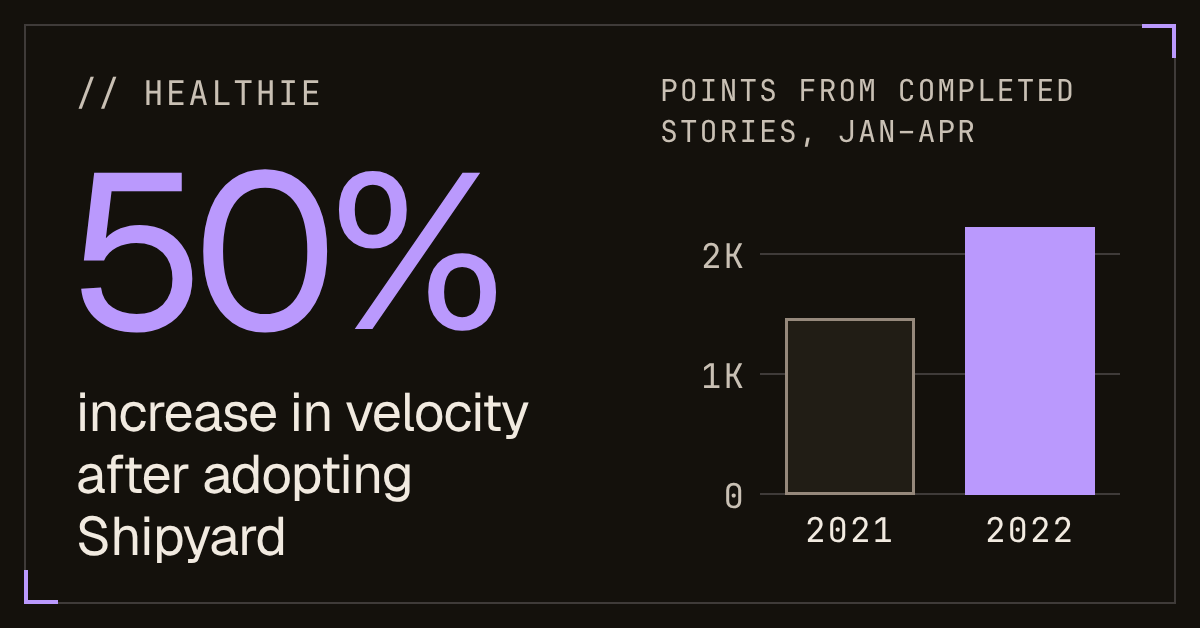
Healthie: 50% increase in velocity after adopting Shipyard, points from completed stories Jan–Apr 2021 vs 2022

Background

Healthie is a comprehensive software that serves as the underlying infrastructure for digital health organizations of all sizes who seek to offer best-in-class, customizable experiences and to scale a provider network for longitudinal care delivery.

We spoke with John Bachir, Director of Engineering at Healthie, to learn more about how Shipyard by StackGen has helped their organization increase reliability and velocity in the development process, across web and mobile teams.

Challenges

Healthie’s engineering organization is made up of full-stack engineers, mobile engineers, QA, and product. The team manages work using a digital Kanban board representing each phase of the development process: code is written by engineers, reviewed and tested by QA, and finally signed off on by product.

back-up 1
Bundled Releases on
a Few Staging Servers:


“In the dark days before Shipyard, we did bundled releases, meaning we bundled up multiple new code changes and features into a single release and that would get tested together. These features and bug fixes would need to be manually deployed to one of a few staging servers, and we had to keep track of what was where. Every time there was an update, we had to push up new changes to the proper staging server.”

improvement 1
A Release Process That
Couldn’t Keep Up:


Deciding what went into each bundle on which staging server was a manual process. “This caused a ton of overhead for releases. Velocity was slowing down. As we grew, we became more efficient as a team: we produced more designs, more product specs… Ultimately, our release process couldn’t keep up with our team’s velocity.”
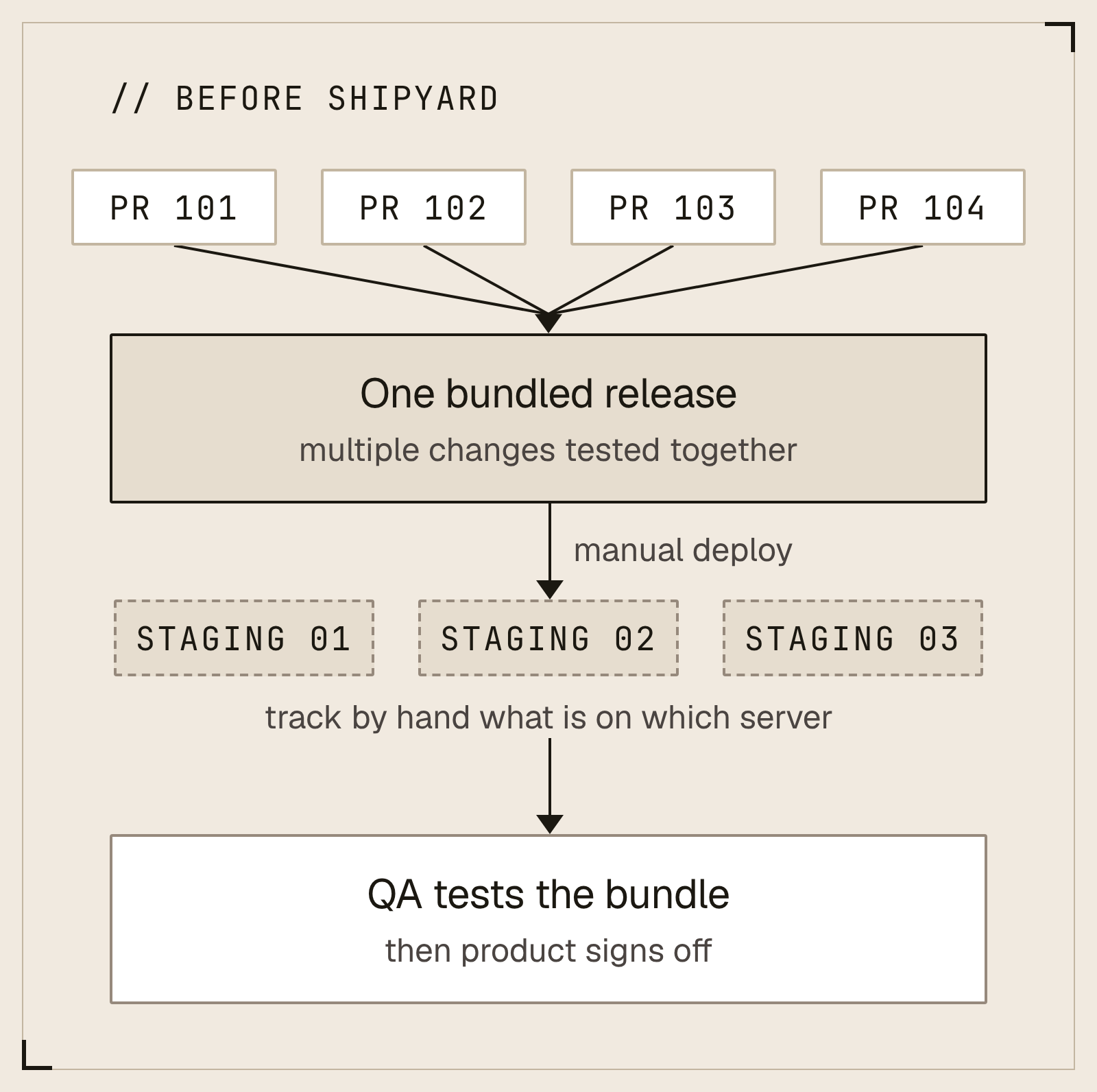
Before Shipyard: pull requests bundled into one release, manually deployed to shared staging servers, then tested together by QA

Solution

Healthie adopted Shipyard by StackGen to give every pull request its own ephemeral environment.

worldwide-network (1) 1
Beyond Adding More
Staging Servers:


At first, John looked into adding more staging servers as a way to unblock new features faster, but quickly hit a world of diminishing returns as each staging server needed its own setup, management, and oversight. He was looking into building a solution himself when he came across Shipyard. He cited his primary fear of using something like Heroku as having to rethink much of what they’ve set up with their current hosting provider and adapt it to a new world where concepts don’t necessarily map to each other.

curve-arrow 1
Docker in Production,
Docker in Shipyard:


“Implementing Shipyard turned out to be simple: we use Docker in production and Shipyard uses Docker. I didn’t have to translate concepts between staging and production: a simple Docker Compose file got us up and running in less than 100 lines of yaml and changing or adding a new service takes less than an hour and max 10 lines of code.”
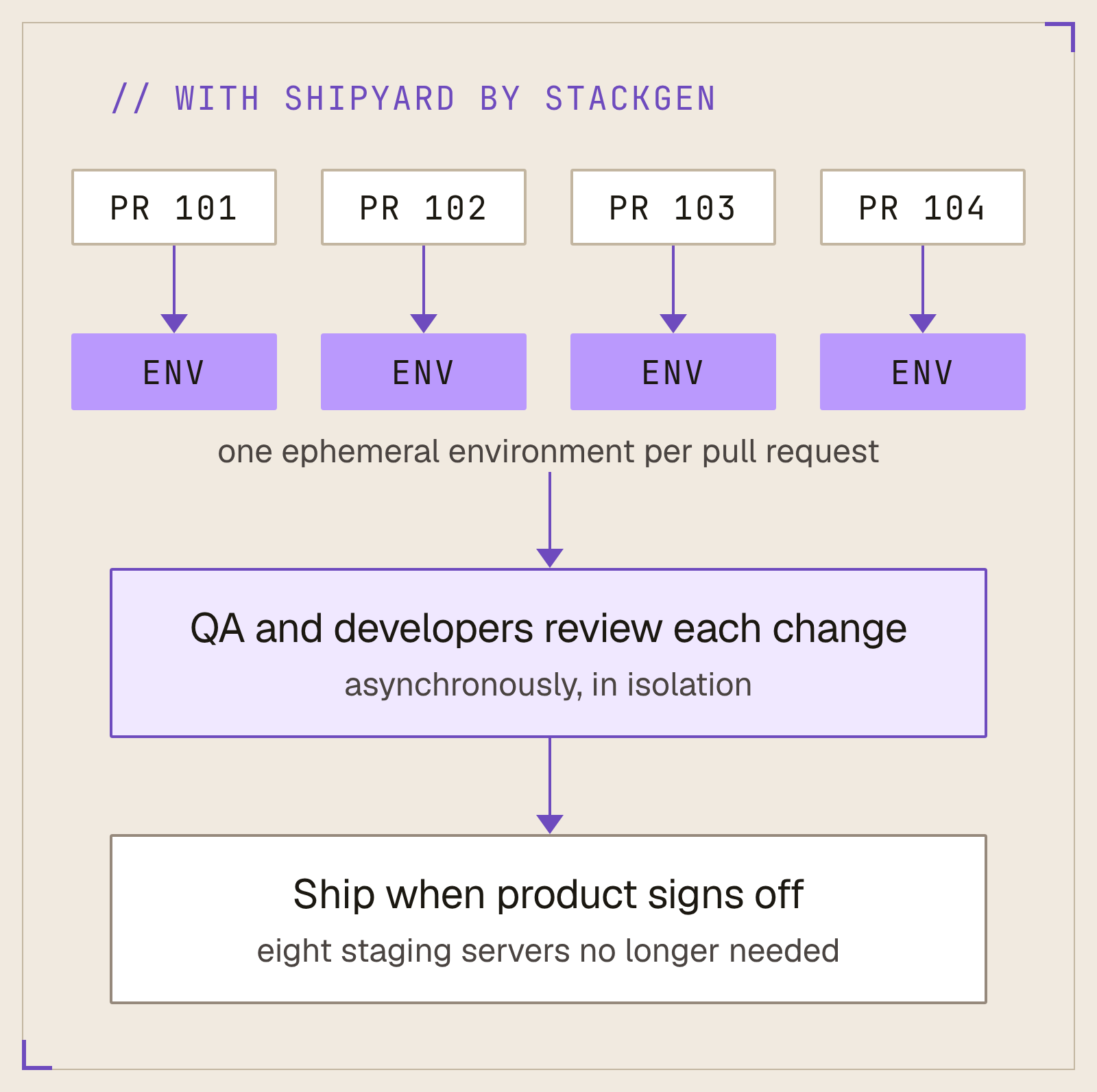
With Shipyard by StackGen: one ephemeral environment per pull request, reviewed by QA and developers in isolation

logo

Results

Today, Healthie has a more predictable and reliable release cadence than ever before, shipping on average over 50% more features than before they adopted Shipyard.

speedometer-arrow 1
Eight Staging Servers
No Longer Needed:


Prior to Shipyard, John and the team maintained eight staging servers, all of which are no longer needed. Each pull request having its own environment allows for asynchronous collaboration and allows QA and developers to directly work together in an isolated fashion.

chat-arrow-down 1
Advice for
Other Teams:


“For any team that finds itself with more than one or two staging environments, stop what you’re doing. Stop making manual staging environments -- don’t create more weight for yourself because it’s simply not scalable. Just use Shipyard.”

— John Bachir, Director of Engineering, Healthie

All

Start typing to search...