.svg)


.svg)
Trusted by platform teams building the future


.svg)











.svg)

Runs with your existing O11y and on-call tools.


Automate SRE operations with intelligence and human oversight
Discovery, triage, root cause and remediation — automated end to end, with humans on the decisions that affect your SLOs.
Intelligent discovery
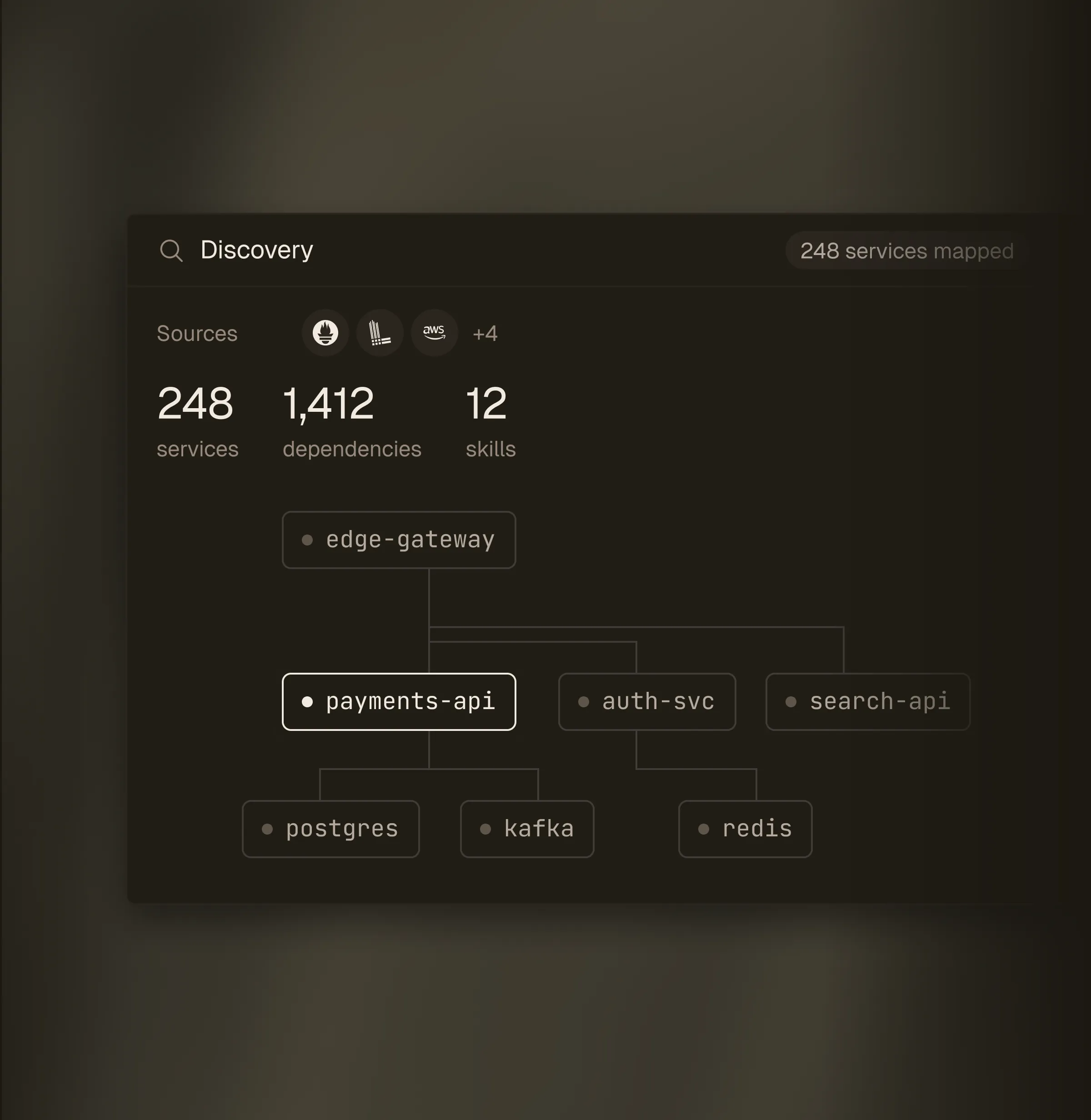
Auto-discover infrastructure, services, and dependencies from your existing observability stack — no manual mapping required.
.svg)
Discovers from your Observability stack
.svg)
Maps AWS, GCP, and Azure cloud infrastructure
.svg)
Builds service topology and dependency graphs
.webp)
Alert intelligence
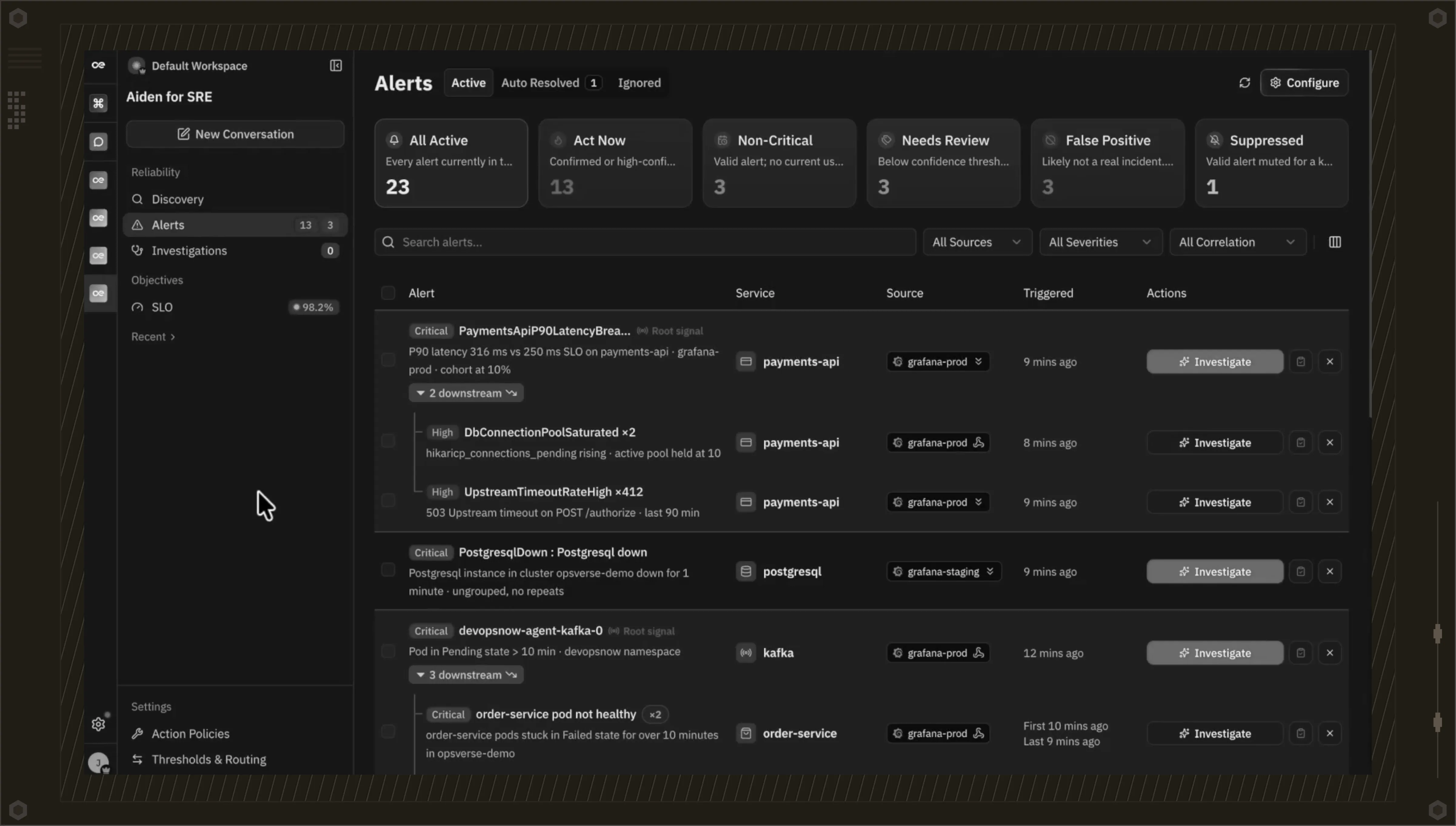
Cut through alert noise with automated correlation, deduplication, and severity classification by blast radius.
.svg)
Auto-categorize by severity and service impact
.svg)
Suppress noise and correlate related alerts
.svg)
Enrich alerts with RCA based on context from Aiden World Model
Actionable root cause analysis
Trace incidents across service dependencies, correlating logs, metrics and events into a probable cause with its evidence.
.svg)
Anomaly detection across metrics and logs
.svg)
Dependency mapping for impact assessment
.svg)
Error pattern recognition and signatures
.webp)
.webp)
Automated incident remediation
Executes remediation workflows for common scenarios with full audit trails, looping in humans for approvals where oversight is needed.
.svg)
Service restarts, scaling, and traffic routing
.svg)
Deployment rollback with approval gates
.svg)
Complete audit trails for every action
Achieve your SLOs
Aiden tracks error budget burn in real time and acts before a breach, not after.
.svg)
Real-time error budget consumption tracking
.svg)
Predicts and remediates issues before your error budget runs out
.svg)
Prioritizes by SLO impact, not alert volume
.webp)
TESTIMONIAL
What Aiden for SRE users
are saying


.avif)
.webp)
faq
Frequently Asked Questions
What observability tools does Aiden integrate with?
Does Aiden automatically fix issues without human approval?
How long does it take to discover my infrastructure?
What if Aiden doesn't support my specific tech stack?
How is Aiden different from traditional AIOps platforms?