.svg)
.svg)


.svg)


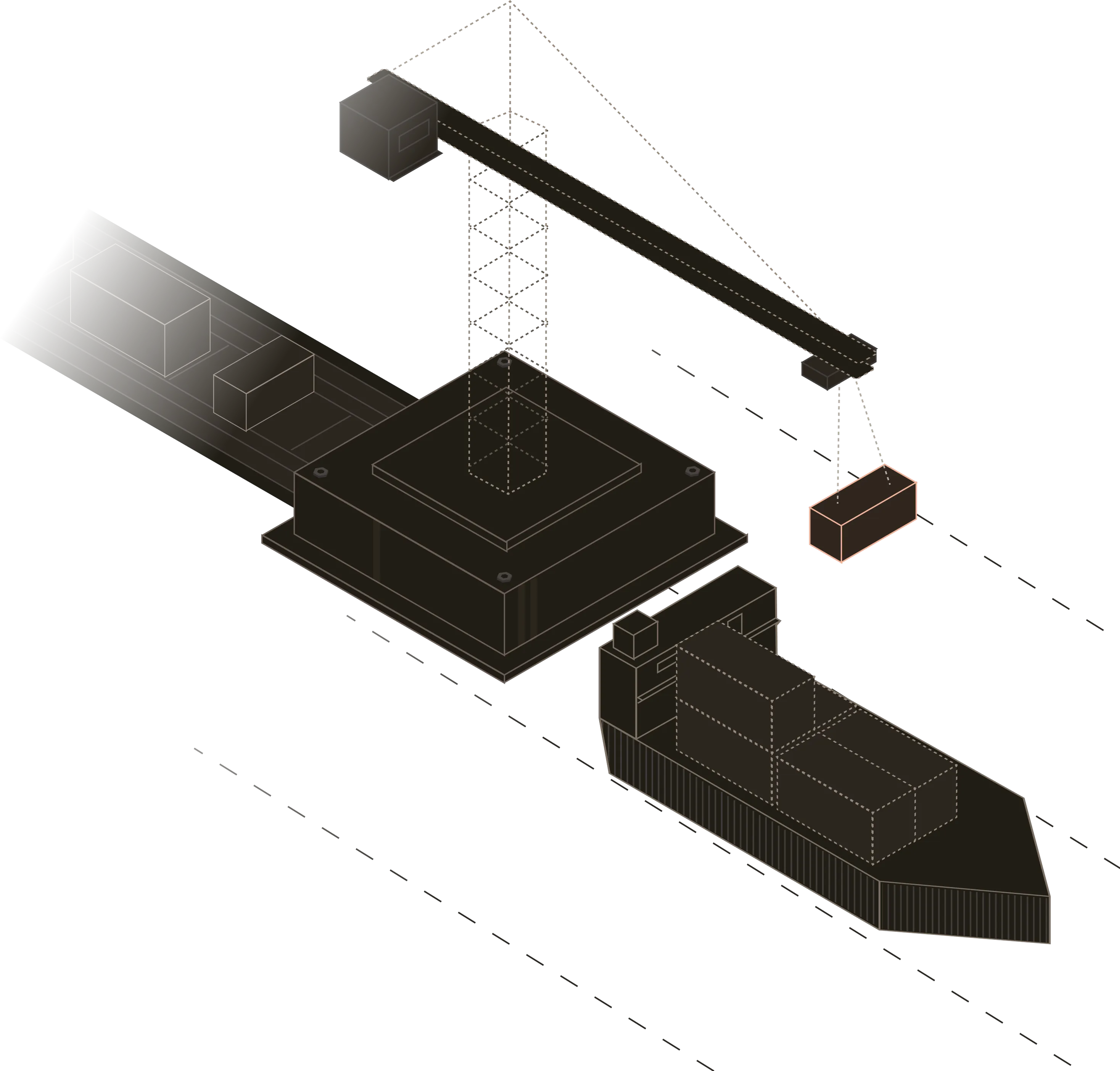
Every pull request gets its own environment.
Developers and coding agents both propose changes. Shipyard gives each one an ephemeral environment to run in, so the team sees what it does before it merges.
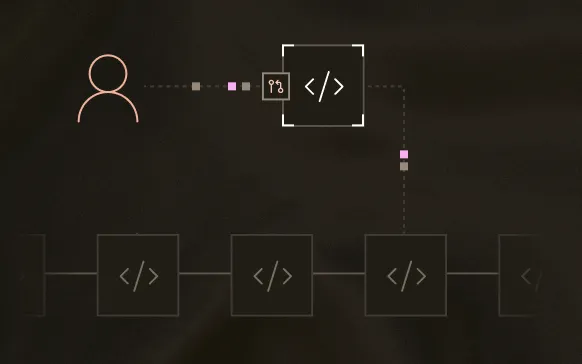
A developer or a coding agent opens a pull request.
.webp)
An ephemeral environment, generated from the application's own definition.
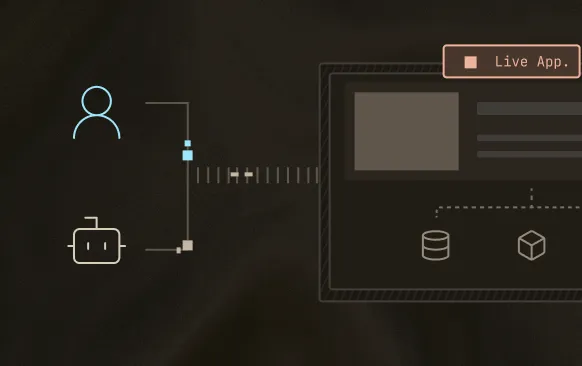
People and agents run it against a live application.
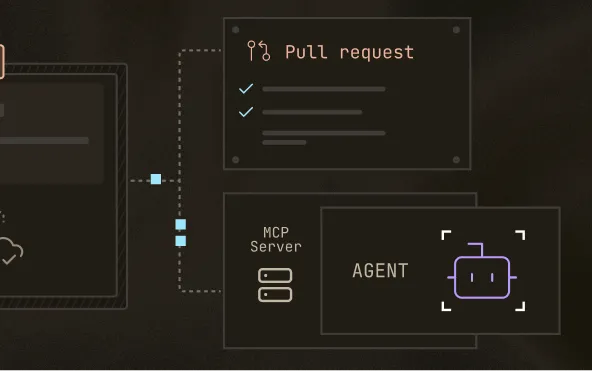
In the pull request, or by the agent through the MCP server.
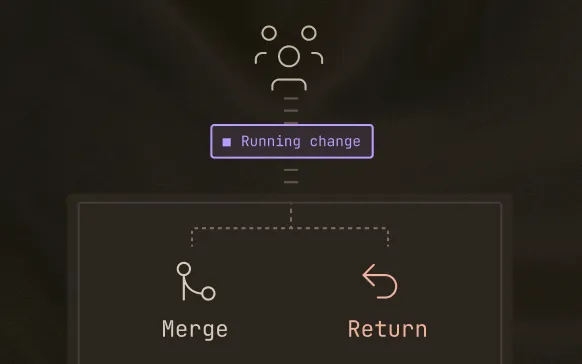
The team decides with the running change in front of them.
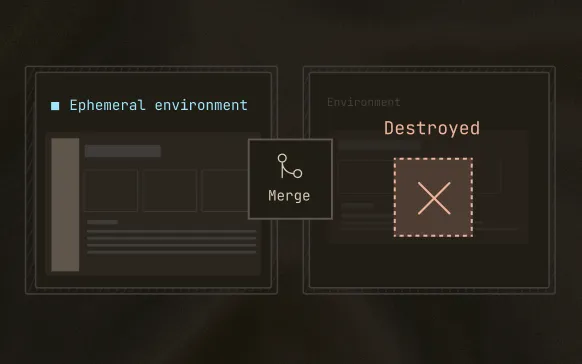
Torn down on merge. Nothing is
left drifting.
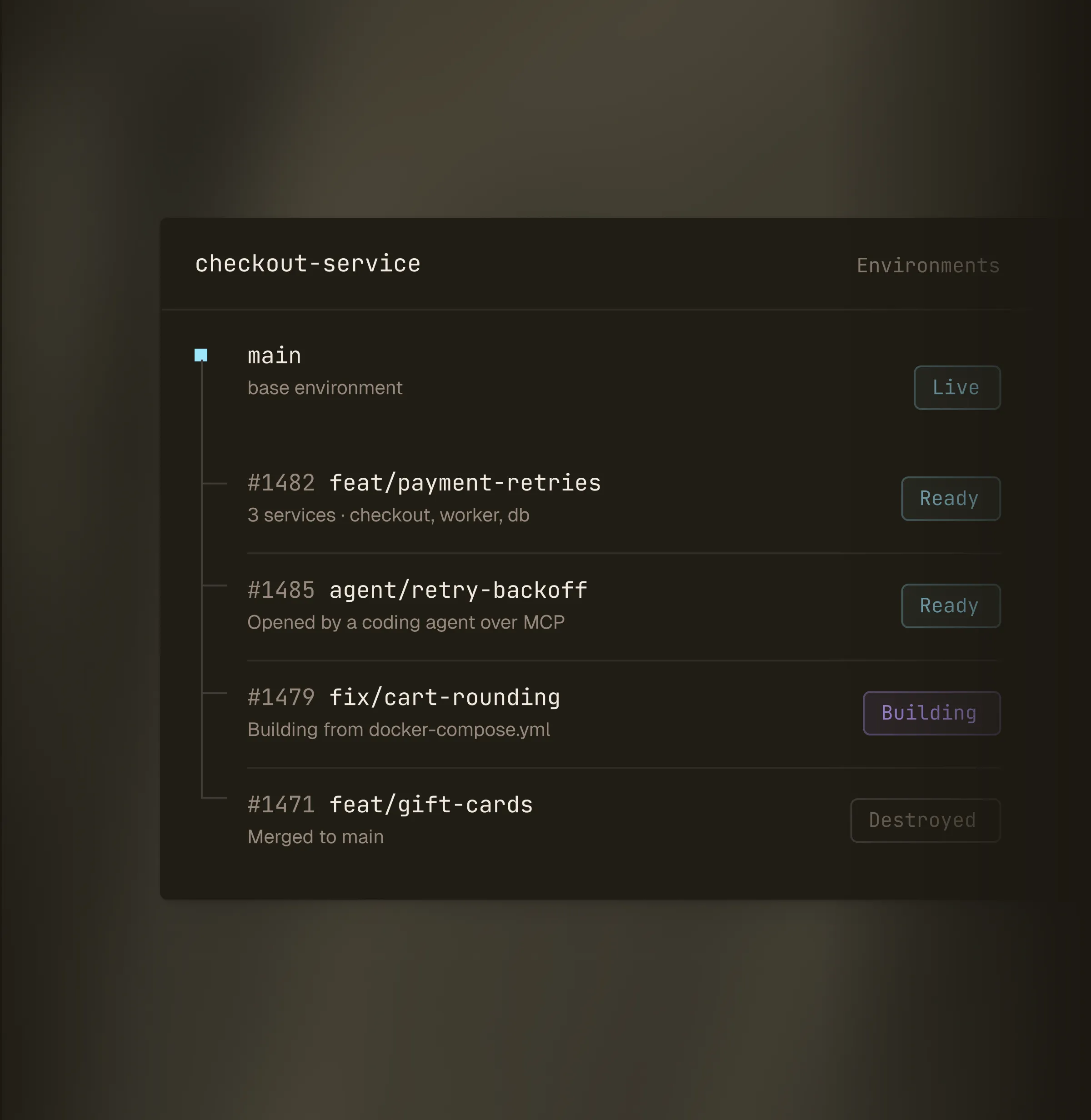
Create as many environments as you need.
Every branch and pull request gets a full-stack ephemeral environment, built from the application's own definition. Environments scale to zero when idle and are destroyed on merge.
.svg)
.svg)
.svg)
.svg)
.webp)
Get fast, lightweight previews.
Push a change and test it against a live environment in the same loop. Developers get feedback in minutes, and coding agents can run the whole cycle on their own.
.svg)
.svg)
.svg)
Review every change in a running app.
Reviewers, QA and product each get a shareable link to the pull request's environment, so they can check the change and sign off before it merges.
.svg)
.svg)
.svg)
.webp)
Built for every team that touches a change

Give coding agents real infrastructure to test against. They open a pull request, run tests over MCP and iterate before anyone reviews.
Stop maintaining shared staging. Every pull request gets a full-stack environment your CI/CD can reach through the Shipyard API.
Run your end-to-end suite against a full-stack environment before merge, in parallel, from GitHub Actions or CircleCI.


How Shipyard accelerates the Autonomous Operations Factory
The agents in the StackGen Autonomous Operations Factory propose changes to infrastructure, pipelines and running services.
Every one of those changes deserves somewhere to prove itself before anyone approves it. Shipyard does that for developers and coding agents today, and it is where we are taking the factory's agents next.