Autonomous Operations Factory
AI made writing code fast. The factory puts governed agents on everything after the commit, from infrastructure and deploys to observability and incident response, on one shared foundation.
[
Inside this brochure
]
- Why AI coding moved the bottleneck to operations
- How the factory puts a governed agent on each step, so work moves from build to remediation without the queue
- The five ways in: Aiden for InfraOps, Aiden for DevOps, Aiden for Observability, Aiden for SRE and Shipyard by StackGen
- How every agent shares the Aiden World Model and runs under Aiden OS, so context and rules carry across every step
- Results from production across the factory
Download the
Brochure
Download PDF
More resources
Brochure
Autonomous Operations Factory
AI made writing code fast. The factory puts governed agents on everything after the commit, from infrastructure and deploys to observability and incident response, on one shared foundation.
Aiden for InfraOps
Aiden for DevOps
Aiden for Observability
Aiden for SRE
Shipyard
Brochure
Aiden for Observability

Unified observability at scale. Fully managed, open-standards observability with AI-correlated logs, metrics, traces and APM, all under one agentic interface.
Aiden for Observability
Brochure
Shipyard by StackGen
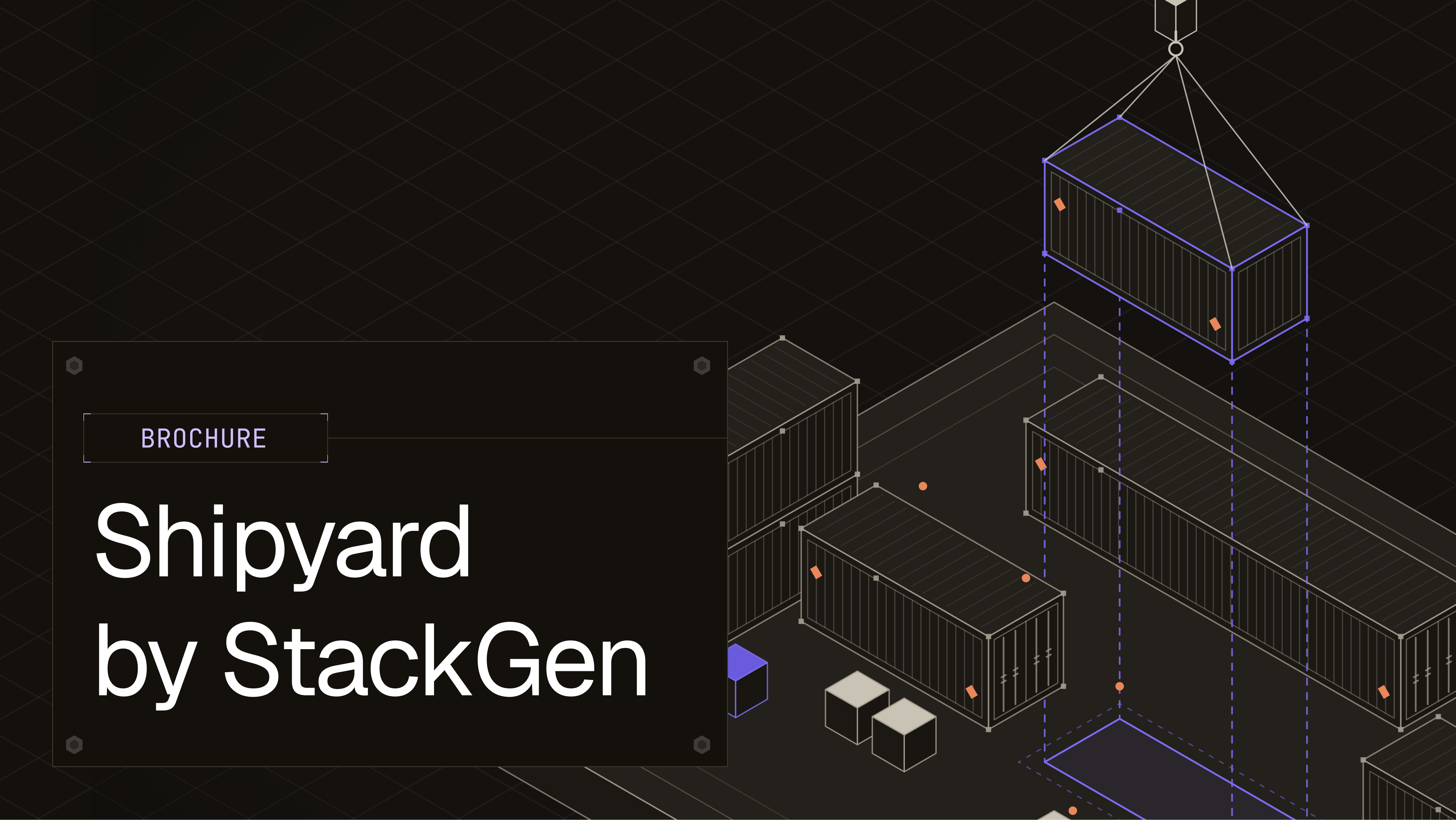
Validate every change before it ships. Shipyard builds an isolated, production-like copy of your app for every pull request, so developers and AI coding agents test the real thing before it merges.
Shipyard
Brochure
Aiden for SRE
Aiden takes the toil: investigating every alert, naming the root cause with evidence, remediating within guardrails and protecting SLOs.
Aiden for SRE
Brochure
Aiden for InfraOps
Ship infrastructure at AI speed, governed by default. Developers request it from the tools they already use, built from approved modules and policy-checked before deploy.
Aiden for InfraOps
Start building your Autonomous Operations Factory today
Book a Demo