

Share This:
Your On-Call Engineer Shouldn't Be a Human Filter
It's 2:47 AM. Your on-call SRE gets paged. Prometheus fires 23 alerts simultaneously — HPA misconfiguration on the payments service, Alertmanager dedup filters overwhelmed, and a cascade of synthetic node-level CPU spikes bleeding across three availability zones. The engineer opens four browser tabs, pulls up Grafana, scans Slack history, and starts mentally triaging.
Forty-five minutes later, the actual root cause is a misconfigured PodDisruptionBudget that was deployed six hours ago. The other 22 alerts? Noise.
This is the reality for SRE teams at scale. You're not running out of engineers — you're drowning them in alerts that don't deserve human attention. The average enterprise SRE team fields 400+ alerts per day. Of those, fewer than 10 are genuinely actionable. The rest are training your team to ignore the paging system entirely.
AI SREs change this equation. Not by hiring faster, but by making the first-response layer intelligent.
Why Traditional Alert Triage Breaks at Scale
Before we get into how to automate alert triage, it's worth understanding precisely where the existing model fails because the failure modes matter for how you design the solution.
Volume without context. Most alerting systems treat every firing threshold equally. A KubePodCrashLooping alert on a one-replica batch job looks identical to the same alert on your checkout service. The router doesn't know the difference. Your on-call engineer does — but only after they've dug through service topology metadata, deployment history, and SLO definitions to establish context that should have been attached to the alert from the start.
Dedup that drops signal. Alertmanager's grouping and inhibition rules are powerful, but they're static. You write them for the infrastructure you have today. When a new microservice deploys, it inherits whatever default alert rules the team wrote eighteen months ago — often with no inhibition rules, no severity calibration, no runbook linkage. Every new service adds 15-20 net-new alert rules that nobody removes when the service changes behavior.
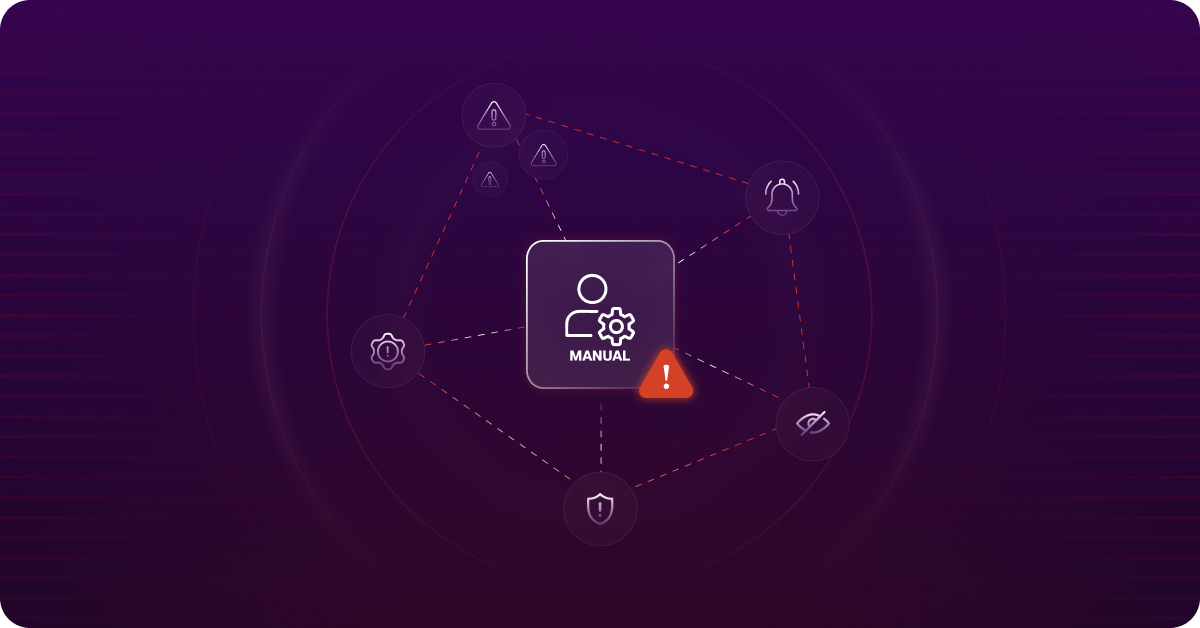
MTTR bloat in the triage phase. Across the industry, the majority of incident MTTR — often 60% or more — is consumed not in remediation, but in diagnosis: establishing what's broken, assembling the right people, and reconstructing the chain of causation. A 4-hour P1 incident often has 90 minutes of "war room formation" before any remediation action is taken. This is a solvable problem, but not with better runbooks. Runbooks are static; production systems are dynamic.
Knowledge concentration. Your best SREs know which alerts to ignore, which correlations matter, and which runbook steps are outdated. That knowledge lives in their heads. When they're unavailable or when they leave, the on-call rotation inherits a tribal knowledge gap that no alert documentation can fully close.
What AI-Driven Alert Triage Actually Looks Like
AI-driven alert triage isn't a black box that makes decisions you can't explain. Done right, it's a structured decision pipeline that runs automatically before your engineers ever see an alert. Here's how the stages work in practice.
Stage 1: Noise Suppression and Deduplication
The first filter is volume reduction. An AI layer trained on your historical alert patterns, resolved incidents, and service topology learns which alert combinations are genuinely correlated versus which are downstream symptoms of a single root event.
When PodOOMKilled alerts fire across six pods simultaneously, the AI layer doesn't page six times. It groups the event, identifies the likely upstream cause (Kubernetes memory limit misconfiguration, JVM heap pressure, or a sudden cardinality spike in your Prometheus remote write), and surfaces a single enriched alert with the full context attached.
This alone can reduce alert volume by 60–80% in mature deployments. Your Alertmanager still fires, the AI layer reads from it, doesn't replace it.
Stage 2: Severity Calibration Against SLO Burn Rate
Not all alerts deserve a 2 AM page. The AI SRE correlates incoming alerts against your SLO burn rate windows. A single HTTPErrorBudgetBurn alert that would exhaust your 30-day error budget in under an hour is critical. The same alert pattern with a 72-hour projected burn crosses no error budget threshold and can route to a next-business-day ticket.
This is multi-window burn rate analysis done continuously — not a static threshold you set once and forget. As your traffic patterns shift, the calibration updates with them.
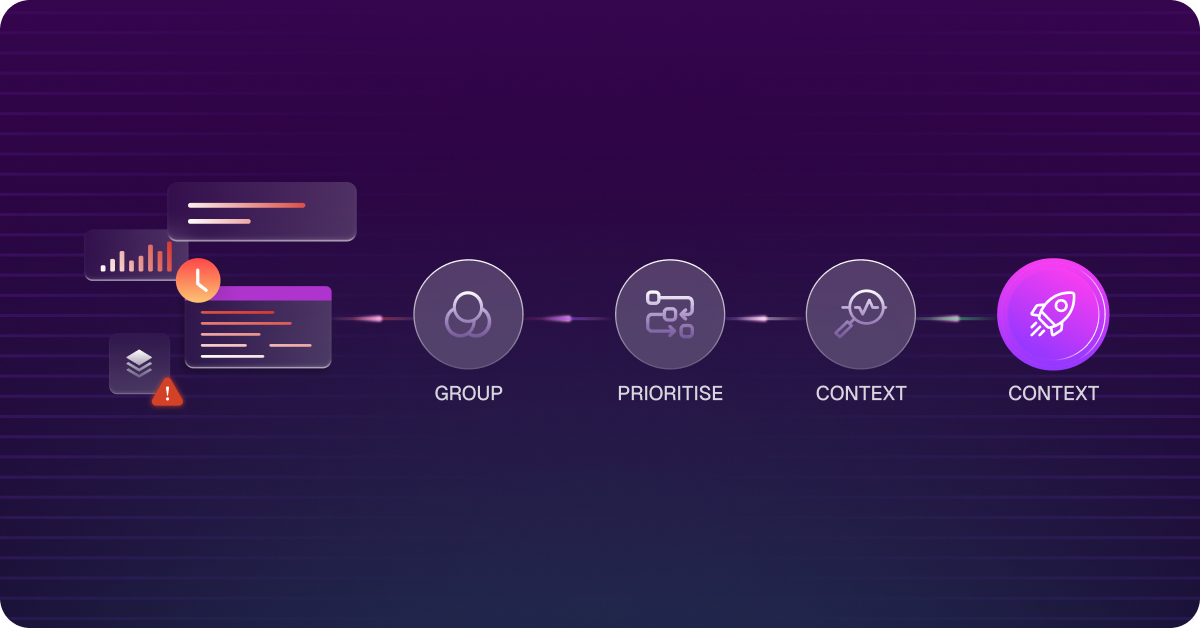
Stage 3: Contextual Enrichment Before Human Handoff
If an alert does need human attention, the engineer shouldn't have to reconstruct context from scratch. By the time the page fires, the AI SRE has already:
- Pulled the last five deployments to the affected service
- Identified correlated infrastructure changes (node pool autoscaling events, certificate renewals, config map updates)
- Attached the relevant runbook section — not the runbook index, the specific section that maps to the failure signature
- Checked whether this alert pattern has fired before, when it was resolved, and what action resolved it
- Assessed blast radius: which downstream services are potentially affected based on your service dependency graph
Your on-call engineer opens the page and has a pre-populated incident timeline, not a blank canvas.
Stage 4: Automated Remediation for Known Failure Signatures
For a subset of alert types, you don't need a human in the loop at all. Pod restarts, certificate rotation failures, stuck Kubernetes jobs, HPA misconfiguration on stateless services — these have deterministic remediation paths. An AI SRE agent can execute the runbook, verify the remediation was effective against the target SLO metric, and close the incident with a full audit trail.
This isn't autonomous action without guardrails. You define the action scope: which services the agent can touch, what operations it's authorized to execute, and when it must escalate to a human regardless of confidence level. The agent operates within that envelope.
Building the Automation Pipeline: A Practical Architecture
Here's how to structure an alert triage automation pipeline that actually works in production.
Prerequisites
Before you implement anything, you need three things in place:
- Structured alert metadata. Every alert must carry service name, team ownership, SLO reference, and severity tier. If your Prometheus alert rules don't have this, start there. You cannot build intelligent triage on unstructured alert data.
- A service dependency graph. Blast radius assessment requires knowing which services depend on which. This can be as lightweight as a YAML file your platform team maintains, or as sophisticated as a live service mesh topology map from your observability stack.
- Historical incident data. Your AI model needs labeled training data — past incidents with their alerts, resolution actions, and time-to-resolve. If you're using PagerDuty, Opsgenie, or similar, this data already exists. Export it.
Alert Routing Architecture
Integrating with Your Existing Stack
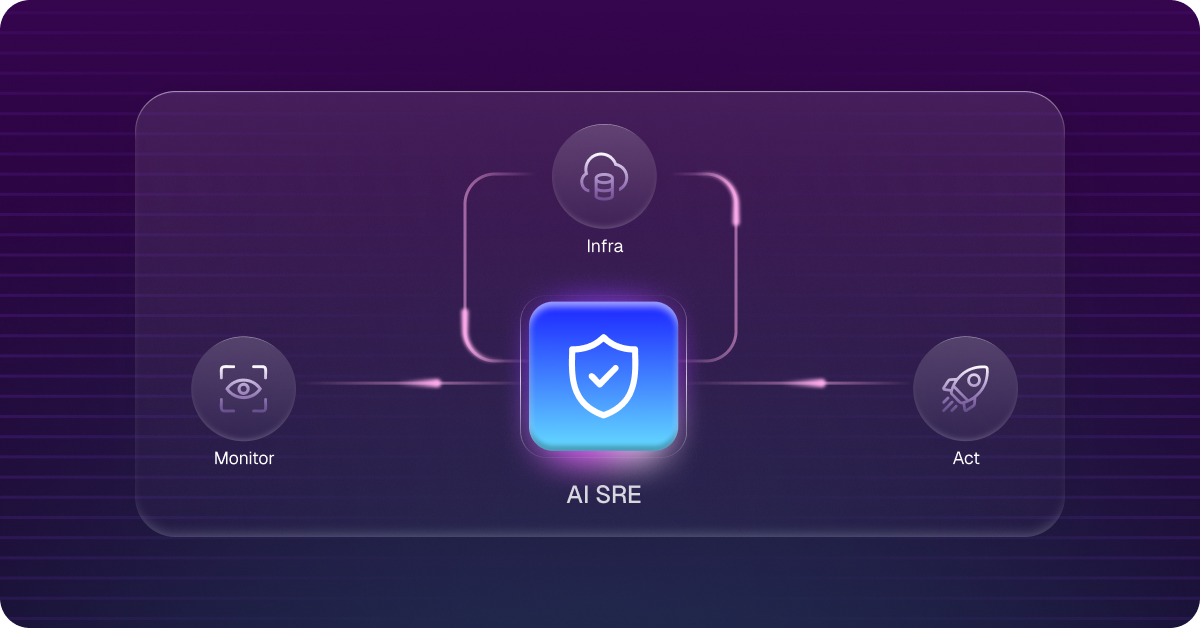
The AI triage layer sits between your alerting source (Prometheus/Alertmanager, Datadog, CloudWatch) and your incident management tool (PagerDuty, Opsgenie, Slack). It doesn't replace either — it enriches the signal flowing between them.
For teams using Prometheus + Alertmanager:
The AI SRE endpoint receives the alert group, runs the enrichment pipeline, and either auto-remediates, suppresses, or forwards to PagerDuty with full context attached.
The Economic Case: Why This Isn't Optional Anymore
SRE teams are expensive to build and expensive to burn out. More critically, alert fatigue is your retention problem. The single most common reason experienced SREs cite for leaving a role is chaotic on-call rotation not compensation, not lack of interesting problems, but the sustained cognitive load of fighting a noisy alerting system at 3 AM. Companies like Coinbase and Snap have reported MTTR reductions of 55–72% after implementing AI-assisted incident triage. The ROI isn't theoretical; it compounds through reduced attrition, faster incident closure, and SRE capacity redirected toward reliability engineering rather than alert acknowledgment.
Engineering leaders are increasingly being asked by their boards and C-suites to demonstrate how AI investments translate to operational outcomes. Alert triage automation is one of the clearest answers available: measurable reduction in MTTR, measurable reduction in engineer toil, and a documented audit trail of every automated action.
Where AI SRE Fits in Your Reliability Stack
Alert triage is the entry point, but it's not the only place AI changes your reliability posture.
Incident prevention. Once your AI system has learned your alert patterns and their correlation with deployments, it can flag risky deployments before they fire, identifying when a new rollout matches the signature of a previous incident-producing change.
Post-mortem acceleration. The same enrichment pipeline that assembles context for active incidents generates a complete incident timeline automatically. Your post-mortem document starts with a full chronology: what fired, what changed, what was investigated, and what fixed it.
Runbook maintenance. AI analysis of resolved incidents identifies which runbook steps were executed versus skipped, and which steps reliably led to resolution. Over time, this surfaces which runbooks are outdated and which remediation patterns are reliable enough to automate fully.
The StackGen's Aiden is built specifically to operate in this loop, ingesting alert context from your existing observability stack, executing runbook-driven remediation within defined guardrails, and handing off to human engineers with full incident context when autonomous resolution isn't appropriate. It integrates with Aiden for SRE workflows to reduce both MTTR and MTTD across the alert lifecycle.
Getting Started: A Phased Rollout
Automating alert triage doesn't require a rip-and-replace. Here's a phased approach that builds confidence before you automate any remediation.
Phase 1 (Weeks 1–4): Instrumentation and baselining. Deploy the AI layer in observe-only mode. It reads your alert stream, applies enrichment and correlation analysis, but takes no action and changes no routing. After four weeks, you'll have a baseline: alert volume by service, noise ratio, average triage time per alert category, and a ranked list of alert types by resolution pattern repeatability.
Phase 2 (Weeks 5–8): Enrichment with human-in-the-loop. Enable contextual enrichment on the routing path. Every alert that pages an engineer arrives with pre-assembled context. Measure the impact on triage time — most teams see 40–60% reduction in time-to-diagnosis in this phase alone.
Phase 3 (Weeks 9–16): Selective automation. Enable auto-remediation for the top 5–10 alert types where confidence is highest and blast radius is lowest. Stateless service pod restarts, stuck batch jobs, certificate rotation failures. Monitor remediation outcomes. Expand scope as confidence accumulates.
Phase 4 (Ongoing): Closed-loop improvement. The AI model improves with every incident. Remediation actions that succeed reinforce the confidence model. Actions that fail or require human override trigger model updates. Over 6–12 months, your automation coverage expands from the obvious cases to the complex ones.
What This Means for Your SRE Team
The goal isn't to replace SREs. The goal is to stop using senior engineers as a first-pass alert filter. When your AI SRE handles noise suppression, severity calibration, contextual enrichment, and routine remediation, your engineers are doing the work they were hired to do: designing reliability systems, refining SLOs, building observability infrastructure, and handling the incidents that genuinely require human judgment.
Teams that have made this shift describe a qualitative change in on-call experience, fewer pages, higher signal per page, and the confidence that when the alert fires, it's real and the context is already there.
That's a different kind of SRE organization. Not bigger, but more capable per engineer.
Ready to See It in Action?
StackGen's Aiden brings AI-driven alert triage and autonomous incident response to your existing observability stack. It integrates with Prometheus, Alertmanager, Grafana, PagerDuty, and the rest of your reliability toolchain — no rip-and-replace required.
Explore how Aiden for SRE reduces MTTR and MTTD, or see how the broader StackGen platform connects alert triage to infrastructure automation and DevOps workflows through Aiden for DevOps and Aiden for Infrastructure.