

Share This:
What Is the Difference Between Spacelift, env0, and StackGen?
Managing infrastructure as code has evolved from a best practice into a competitive differentiator. As cloud environments grow across multiple providers, dozens of teams, and thousands of resources, the IaC platform you choose shapes your deployment velocity, governance posture, and engineering costs.
Spacelift, env0 (env zero), and StackGen are three of the most-evaluated platforms in this space in 2026. Each solves the IaC management problem differently:
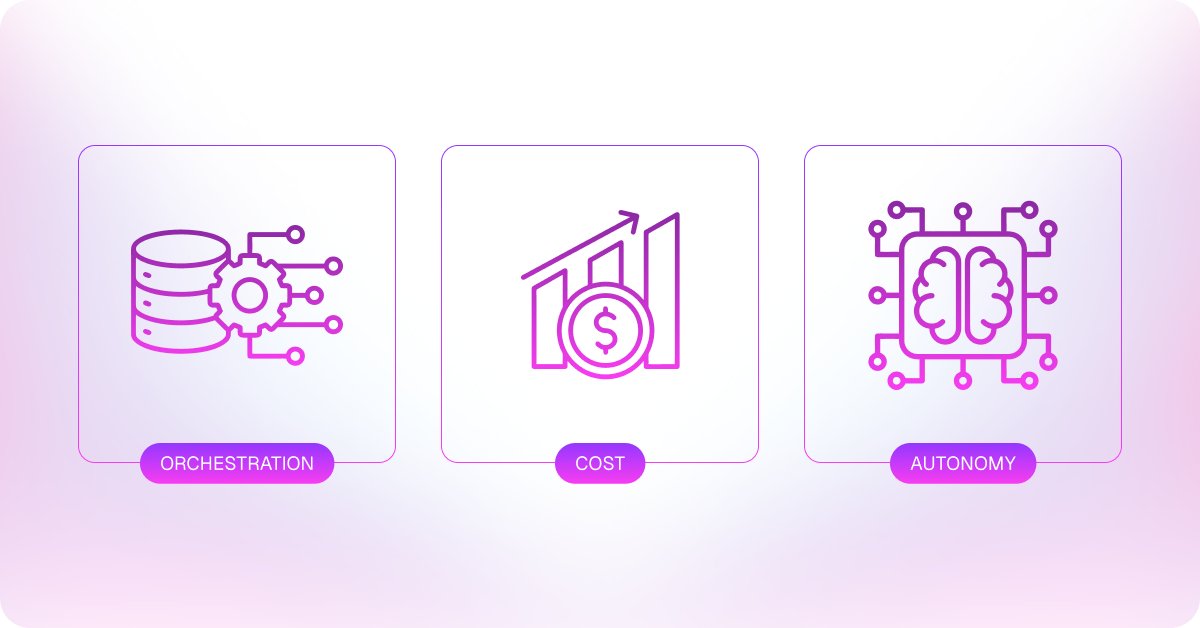
- Spacelift focuses on orchestration, bringing multiple IaC tools under a single governed pipeline with deep policy-as-code capabilities.
- env0 focuses on collaboration and cost, making Terraform-based workflows collaborative, self-service, and financially transparent.
- StackGen focuses on autonomy using AI agents to generate, deploy, govern, and remediate infrastructure with minimal human involvement.
This guide covers every dimension that matters for platform selection: tooling support, AI capabilities, policy enforcement, drift detection, developer self-service, cost management, deployment models, compliance, and pricing. Use the comparison table and decision guide at the end to match your team's needs.
What Is Spacelift and What Does It Do?
Spacelift is an infrastructure orchestration platform that manages the entire IaC lifecycle, provisioning, configuration, and governance in a single, policy-governed pipeline. Founded in 2020, it is the first and only IaC orchestration platform to achieve FedRAMP authorization (September 2025), making it uniquely suited for government agencies and regulated industries.
Spacelift Key Features
Multi-IaC Orchestration: Spacelift natively supports Terraform, OpenTofu, Pulumi, CloudFormation, Ansible, Kubernetes, Terragrunt, and more — the broadest IaC tool support of any platform in this comparison. Stack dependencies allow outputs from one tool to flow into another, enabling true cross-tool automation pipelines.
Policy-as-Code with OPA: Spacelift's policy framework is built on Open Policy Agent (OPA) and operates at multiple enforcement points — plan, push, approval, notification, and task. Unlimited OPA policies are available even on the free tier. A built-in policy workbench allows teams to test policies before deployment.
Example: Spacelift OPA Policy — Block deployments missing required tags
Stack Dependencies: Spacelift lets teams define dependency graphs across stacks, even across different IaC tools. A parent Terraform stack can trigger a child Kubernetes stack when it completes successfully — enabling sophisticated multi-stage pipelines.
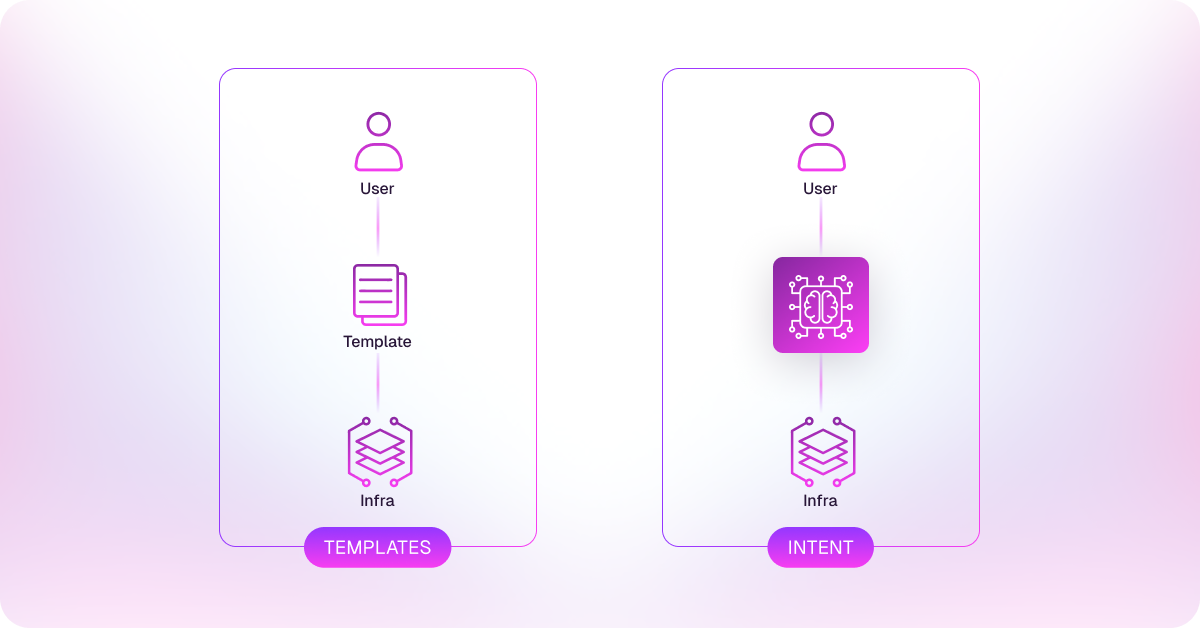
Spacelift Intent (AI): Introduced in October 2025, Spacelift Intent lets teams provision non-critical infrastructure using natural language while governance policies continue to apply. This is Spacelift's "low-friction path" for simple, repeat provisioning tasks.
Saturnhead AI: Provides intelligent diagnostics when runs fail — explaining what went wrong and suggesting remediation steps. This reduces time-to-resolution for failed deployments without requiring senior engineer intervention.
Deployment Flexibility: Spacelift supports SaaS, self-hosted on any cloud, on-premises, and fully air-gapped deployments — the most flexible deployment model in this comparison. See Spacelift enterprise deployment options.
Drift Detection: Continuous monitoring alerts teams when live resource state diverges from declared IaC state. Drift detection is available across all supported IaC tools.
Who Should Use Spacelift?
Spacelift is the strongest choice for platform engineering and DevOps teams that operate across multiple IaC tools and need a unified, policy-rich orchestration layer. It is particularly compelling for:
- Teams running mixed IaC toolchains (Terraform + Ansible + Kubernetes, etc.)
- Enterprises requiring FedRAMP, SOC2, or air-gapped deployment compliance
- Organizations migrating from Terraform Enterprise looking for cost savings with comparable governance
- Teams that need granular, testable OPA policies across multiple enforcement points
→ spacelift.io · Documentation · Spacelift Pricing
What Is env0 (env zero) and What Does It Do?
env0, now rebranded as env zero, is a cloud governance platform that automates IaC deployment with a focus on collaborative workflows, developer self-service, and cloud cost management. env0 raised a $35M Series A in 2023 and has since invested heavily in AI-assisted governance, real-time cost tracking, and drift intelligence.
env0 Key Features
Environment-Centric Model: env0 organizes deployments around environments — each environment maps directly to an IaC workspace (e.g., a Terraform workspace). This maps naturally to how teams think about infrastructure: dev, staging, production, ephemeral PR environments.
Cost Management — env0's Differentiator: env0 injects custom resource tags via Terratag before deployment, then queries cloud provider APIs to report actual spend by team, project, and environment after deployment. Pre-deployment cost estimates show the financial impact of each infrastructure change before it is applied. Native integrations with CloudHealth and Cloudability tie into centralized FinOps workflows.
Cloud Compass (AI IaC Coverage Analysis): Cloud Compass uses AI to scan cloud accounts and identify resources not yet managed by IaC — ClickOps assets that sit outside governance controls. It auto-assesses coverage gaps, tracks trends over time, and helps teams codify unmanaged resources into Terraform or OpenTofu. This is particularly valuable for organizations mid-migration to IaC.
Cloud Analyst (Conversational Infra Intelligence): A new AI tool that accepts natural language questions about infrastructure — "What changed in our production environment last week?" or "Which teams have the highest cloud spend this quarter?" — and returns structured insights without manual reporting.
Instant Drift Detection & Drift Cause Analysis: env0's drift detection identifies configuration drift within minutes of onboarding. Drift Cause Analysis uses AI to explain why drift occurred, not just that it happened — enabling faster, more confident remediation decisions.
Example: env0 Custom Flow — Run a security scan before apply
Reusable Templates & Self-Service: Platform teams define approved IaC templates. Developers deploy them through a governed self-service portal with configurable approval workflows — maintaining governance without creating a ticket-queue bottleneck.
OPA Policy Integration: env0 supports OPA-based Policy-as-Code focused on deployment-time governance. Approval workflows and RBAC are configured at the project and organization level. Native OPA support has been on the roadmap and is being progressively rolled out alongside ready-to-use policy templates.
MCP Server Integration: The env0 MCP Server (launched 2025) brings infrastructure management directly into developer IDEs, allowing teams to query environments, trigger deployments, and review drift without leaving their development environment.
Who Should Use env0?
env0 is the strongest choice for Terraform-centric teams where cloud cost governance and developer self-service are the primary concerns:
- Teams with heavy Terraform/Terragrunt usage and growing cloud spend management needs
- Organizations that need pre-deployment cost estimates and actual spend visibility by team
- DevOps teams managing large numbers of ephemeral environments (dev, staging, PR previews)
- Companies mid-migration to IaC that need to discover and codify ClickOps assets
- Teams migrating from Terraform Cloud/HCP Terraform — env0's migration wizard simplifies workload moves
→ env0.com · Pricing · New Features
What Is StackGen and What Does It Do?
StackGen is an autonomous infrastructure platform that uses AI agents to generate, deploy, govern, and remediate infrastructure with minimal human involvement. StackGen was recognized as a Sample Vendor in four Gartner Hype Cycle reports in 2025 — Platform Engineering, Site Reliability Engineering, Infrastructure Strategy, and I&O Automation — all in the Infrastructure from Code category.
StackGen Key Features
Aiden AI Infrastructure Copilot: Aiden is StackGen's AI DevOps copilot — the primary way teams interact with infrastructure. Instead of writing Terraform, developers describe what they need in natural language:
Aiden understands application context, generates production-ready IaC, and deploys it through self-validating pipelines with intelligent rollback — reducing provisioning time by 95% for daily iterations according to StackGen's published ROI data.
Intent-to-Infrastructure Platform: StackGen's core architecture translates business intent into infrastructure automatically. AI agents generate IaC, validate it against organizational policies, deploy it, and remediate issues — replacing manual template creation, expert-dependent IaC coding, and human orchestration.
Continuous Compliance Enforcement: Rather than point-in-time scans, StackGen enforces policies in real time. Security violations and compliance drifts are caught before deployment — not blocked at plan time. The platform claims an 85% decrease in policy violations through automatic enforcement at the point of creation.
Drift Detection and Auto-Remediation: StackGen continuously monitors deployed resources against IaC definitions. When unauthorized changes are detected, real-time Slack notifications fire instantly. The platform can auto-remediate, restoring desired state without manual intervention.
Lifecycle Management: StackGen manages the full infrastructure lifecycle from provisioning to decommissioning. One-click rollback restores the last known good state during failures, minimizing downtime and mean time to recovery.
StackGen MCP + Cursor Integration: The StackGen MCP integration connects directly to Cursor, bringing live infrastructure context — VPC IDs, subnet configs, IAM roles, tagging policies — into the IDE. This enables environment-aware IaC generation without context switching. Teams reduce time from infrastructure request to reviewed, mergeable IaC by over 60%.
Wiz Security Integration: StackGen's integration with Wiz brings enterprise-grade CSPM scanning directly into the IaC development lifecycle — catching security misconfigurations before deployment rather than after.
Enterprise Security: SOC 2 Type II certified, FedRAMP-ready, and HIPAA compliant. Supports SAML 2.0, OIDC, and LDAP. RBAC, data masking, and audit trails are built-in.
Who Should Use StackGen?
StackGen is designed for enterprises ready to move beyond manual IaC management toward autonomous operations. It is the strongest fit for:
- Enterprises where developer wait time for infrastructure is the primary velocity bottleneck
- Platform engineering teams spending the majority of their time on repetitive provisioning and IaC ticket queues
- SRE teams where 60%+ of on-call time is spent on automatable tasks
- Engineering leaders looking to reduce platform team headcount requirements while increasing throughput
- Organizations building internal developer platforms that need self-service without requiring IaC expertise
→ stackgen.com · Platform Overview · IaC Lifecycle Management · Gartner Hype Cycle Recognition
Spacelift vs env0 vs StackGen: Full Feature Comparison (2026)
The table below compares the three platforms across the dimensions that matter most for IaC platform selection:
How Do These IaC Platforms Compare on Key Dimensions?
AI and Automation: Which Platform Is Most AI-Native?
Spacelift uses AI as an assistive layer. Spacelift Intent enables natural language provisioning of non-critical workloads. Saturnhead AI explains run failures and suggests fixes. AI accelerates human decisions but the human remains the primary actor.
env0 applies AI to data and analytics. Cloud Compass identifies IaC coverage gaps using AI-assisted analysis. Cloud Analyst enables conversational infrastructure insights. Drift Cause Analysis uses AI to explain why drift happened. The focus is on visibility and decision-support, not autonomous action.
StackGen positions AI as the primary actor. Aiden generates infrastructure from intent, enforces compliance continuously, and handles incident triage autonomously. For teams willing to trust AI agents with production infrastructure workflows, the productivity gains are substantial — but require organizational readiness for this level of automation.
.png?width=1200&height=628&name=2.%20AI%20and%20Automation_%20Which%20Platform%20Is%20Most%20AI-Native_%20(1).png)
Policy and Governance: Who Has the Deepest Controls?
Spacelift has the most mature policy framework. Unlimited OPA policies across five enforcement points, a policy workbench for pre-deployment testing, and tight integration into every run stage give compliance-heavy organizations maximum control. This is Spacelift's clearest differentiator.
env0 provides solid OPA-based governance focused on approval workflows and RBAC. It is comprehensive enough for most enterprises but less granular than Spacelift at the policy-enforcement layer — particularly for organizations that need policies across multiple decision points in a single run.
StackGen embeds policy enforcement into the AI generation process itself. Violations are caught before code is written, not blocked at plan time. This shifts governance fundamentally left — but the control model is different from OPA-based rule writing, which may require adjustment for teams with established policy frameworks.
Cost Management: Which Platform Saves the Most Money?
env0 is the clear leader for direct cloud cost management. Pre-deployment cost estimates, actual spend tracking using Terratag-based tagging, per-team and per-environment visibility, and native FinOps tool integrations create a comprehensive cost governance workflow. For organizations where FinOps is a primary driver, env0's capabilities are uniquely differentiated.
StackGen claims AI-driven cost optimization resulting in 60% lower infrastructure costs, primarily through eliminating developer wait time, reducing unnecessary resource provisioning, and automating decommissioning of unused environments.
Spacelift provides basic cost visibility but does not specialize in cost management. Teams that need cloud spend governance at a deep level should evaluate env0 for this use case.
Developer Self-Service: How Easy Is It for Developers to Provision Infrastructure?
- Spacelift: Blueprints provide governed templates developers deploy via a UI or through the AI assistant using structured requests
- env0: Self-service template portals with approval workflows expose approved patterns to developers in a governed catalog
- StackGen: Developers describe what they need in natural language — no IaC expertise required. Aiden handles generation, validation, and deployment. The self-service model requires no prior infrastructure knowledge
Deployment Flexibility: On-Premises, Air-Gapped, and Regulated Environments
Spacelift is the most deployment-flexible platform in this comparison. It is the only IaC orchestration platform with FedRAMP certification, and supports SaaS, any cloud provider (self-hosted), on-premises, and fully air-gapped deployments. This makes it the default choice for government agencies and organizations with strict data residency or network isolation requirements.
env0 operates as a SaaS platform with self-hosted agent support — balancing ease of use with execution control behind a customer's network perimeter. For most enterprises, this is sufficient.
StackGen provides SaaS and enterprise self-hosted options with FedRAMP readiness, SOC 2 Type II, and HIPAA compliance — covering regulated industries such as healthcare and financial services.
Which IaC Platform Should You Choose?
Choose Spacelift if:
- You operate mixed IaC toolchains and need unified orchestration across all of them
- Deep, testable, multi-point OPA policy enforcement is a non-negotiable requirement
- Your organization requires FedRAMP certification or air-gapped deployment support
- You are migrating from Terraform Enterprise and need comparable governance at lower cost
- Compliance reporting and audit trails are a primary use case
Choose env0 if:
- Your team is Terraform/Terragrunt-heavy and cloud cost governance is a top priority
- You need pre-deployment cost estimates and actual cloud spend tracking per team and environment
- You have ClickOps-created assets that need to be discovered and codified into IaC
- Developer self-service through approved templates and approval workflows fits your culture
- You are migrating from Terraform Cloud or HCP Terraform and want a smooth, fast migration
Choose StackGen if:
- Your platform team spends most of its time on IaC ticket queues and manual provisioning
- You want AI to generate production-ready, policy-compliant IaC from developer intent
- Developer velocity — not just governance — is the primary platform engineering goal
- Your SRE team spends 60%+ of on-call time on automatable toil
- You are building an internal developer platform that requires zero IaC expertise from application developers
Spacelift vs env0 vs StackGen: Pricing Comparison
Spacelift: Usage-based pricing that does not charge per Resource Under Management (RUM) — a meaningful cost advantage over Terraform Enterprise. Users report reductions from millions annually to tens of thousands. A free tier is available. → spacelift.io/pricing
env0: The Pro plan starts at approximately $349/month for up to 10 users and 100 deployments, with additional users and deployments available as add-ons. Cloud Compass adds approximately $18,000 annually. Enterprise pricing is quote-based. A 30-day free trial is available. → env0.com/pricing
StackGen: Enterprise quote-based pricing. StackGen reports an average 350% ROI for enterprise customers and a deployment timeline of 4-6 weeks. → stackgen.com
Frequently Asked Questions About IaC Platforms
Is Spacelift better than Terraform Cloud?
Spacelift offers deeper IaC tool support (Terraform, OpenTofu, Pulumi, Ansible, Kubernetes, CloudFormation, Terragrunt), a more granular OPA-based policy framework, and greater deployment flexibility including on-premises and air-gapped options. Terraform Cloud (HCP Terraform) is tightly integrated with the HashiCorp ecosystem but is narrower in scope. Many teams migrating from Terraform Enterprise find Spacelift delivers comparable governance at significantly lower cost.
What is the difference between env0 and Spacelift?
Spacelift is a broader multi-IaC orchestration platform with deep policy-as-code capabilities and flexible deployment models. env0 focuses more narrowly on collaborative Terraform automation with exceptional cloud cost management features. Spacelift is stronger for multi-tool orchestration and policy complexity. env0 is stronger for cost governance and FinOps-driven organizations. See the full env0 vs Spacelift comparison at:
spacelift.io/blog/env-zero-vs-spacelift
What is StackGen's approach to IaC management?
StackGen takes an autonomous approach to IaC management — using AI agents to generate, deploy, govern, and remediate infrastructure from natural language intent rather than requiring engineers to write Terraform or other IaC code manually. StackGen's Aiden AI copilot handles the translation from business intent to production-ready, policy-compliant infrastructure code. StackGen was recognized in four Gartner Hype Cycle reports in 2025 for this Infrastructure from Code approach.
Does StackGen support Terraform?
Yes. StackGen supports Terraform and OpenTofu as IaC backends, along with Helm and Kubernetes. StackGen can reverse-engineer existing Terraform state files and cloud resources into clean, version-controlled IaC modules. It integrates with AWS, Azure, and GCP, and connects to CI/CD pipelines, Backstage, and monitoring/security tools via APIs and webhooks.
Which IaC platform is best for enterprise compliance?
For enterprise compliance requirements, the answer depends on the specific need. For FedRAMP and government/regulated industry deployments, Spacelift is the only IaC orchestration platform with FedRAMP certification as of 2025. For SOC 2 Type II, all three platforms are certified or compliant. For HIPAA compliance, StackGen provides HIPAA-ready infrastructure. For deep OPA policy governance with multiple enforcement points, Spacelift has the most mature framework.
Conclusion: The Right IaC Platform Depends on Where You Are Today
Spacelift, env0, and StackGen each represent a distinct philosophy of how infrastructure teams should work in 2026.
Spacelift is the mature, enterprise-ready orchestration platform — broadly compatible, policy-rich, and deployment-flexible. It is the right choice for teams managing complex multi-tool IaC environments where governance depth and deployment flexibility are the primary requirements.
env0 is the cost-aware, collaboration-focused platform — the best-in-class choice for teams that need visibility into cloud spend alongside solid IaC governance. Its FinOps capabilities are genuinely differentiated and hard to replicate with other tools.
StackGen is the forward-looking autonomous platform — designed for enterprises ready to let AI agents handle the infrastructure heavy lifting. With recognition in four Gartner Hype Cycles and a reported 350% ROI for enterprise customers, it represents the direction the IaC industry is moving toward.