

Share This:
Introduction
Site Reliability Engineering has reached a critical inflection point. With production environments growing exponentially complex—spanning multiple clouds, hundreds of microservices, and thousands of metrics—traditional SRE approaches are buckling under the weight. SREs face an average of 50+ alerts per day, with 60% turning out to be false positives. The manual toil of investigating, correlating, and remediating incidents is burning out teams and extending Mean Time to Resolution (MTTR) beyond acceptable levels.
AI-powered SRE tools are emerging as the answer to this crisis. By applying machine learning to observability data, automating root cause analysis, and executing intelligent remediation, these platforms are fundamentally transforming how teams maintain reliability. In this guide, we'll explore the top AI SRE tools for 2026 that are helping teams reduce MTTR by 40-60%, eliminate alert fatigue, and shift from reactive firefighting to proactive reliability engineering.
Whether you're an SRE looking to reduce on-call burden, a Platform Engineer seeking better automation, or an Engineering Leader evaluating reliability investments, this analysis will help you understand which AI-powered solutions deliver real value.
StackGen: AI-Powered Platform for Modern SRE Teams
Why we lead with StackGen: We built StackGen specifically to solve the problems keeping SREs up at night. Our AI-powered platform combines unified observability, intelligent incident management, and automated remediation in a way that no other tool does.
What Makes StackGen Different
StackGen's Aiden AI Copilot is purpose-built for site reliability engineering. Unlike generic AIOps platforms that apply broad machine learning to alerts, Aiden understands the specific patterns, failure modes, and remediation strategies that matter for cloud-native infrastructure. We trained our AI on millions of real-world incidents, giving it domain-specific intelligence that translates to measurably better outcomes.
Key Capabilities:
- Unified Observability: We integrate metrics, logs, traces, and events in a single platform, eliminating the context-switching that slows down incident response. Our ObserveNow dashboard gives you complete visibility across your entire stack—from Kubernetes clusters to application-layer performance.
- Intelligent Root Cause Analysis: Aiden automatically correlates signals across your infrastructure to pinpoint root causes in seconds, not hours. When an incident occurs, our AI analyzes dependency graphs, change history, and anomaly patterns to identify the actual problem—not just the symptoms.
- Automated Remediation: We go beyond alerting. Aiden can automatically execute remediation playbooks based on incident type, reducing MTTR by 40-60%. Whether it's restarting a failed pod, rolling back a problematic deployment, or scaling resources, our AI takes action while keeping humans in the loop.
- Context-Aware Alerting: We eliminate alert fatigue by applying AI to determine alert severity and routing. Aiden learns your team's response patterns and only escalates incidents that genuinely need human attention, reducing noise by 70%.
Real-World Impact
Our customers see measurable results:
- MTTR Reduction: Average 55% decrease in Mean Time to Resolution
- Alert Volume: 70% reduction in non-actionable alerts
- On-Call Load: SRE teams report 40% fewer after-hours pages
- Cost Efficiency: 45% reduction in observability tooling costs vs. traditional APM
Who StackGen Is For
We designed StackGen for cloud-native teams running modern infrastructure:
- SREs who need AI-powered assistance to manage complex distributed systems
- Platform Engineers building internal developer platforms who want integrated observability
- DevOps teams seeking to reduce operational toil through intelligent automation
- Engineering Leaders looking to improve reliability metrics while controlling costs
Getting Started
StackGen offers a fully-featured 14-day trial with no credit card required. We integrate with your existing observability tools (Prometheus, Grafana, Datadog) and can be deployed in under 30 minutes. Our team provides white-glove onboarding to help you configure Aiden AI for your specific environment.
Learn More: Read Documentation | Book a Demo
PagerDuty AIOps: Intelligent Incident Response
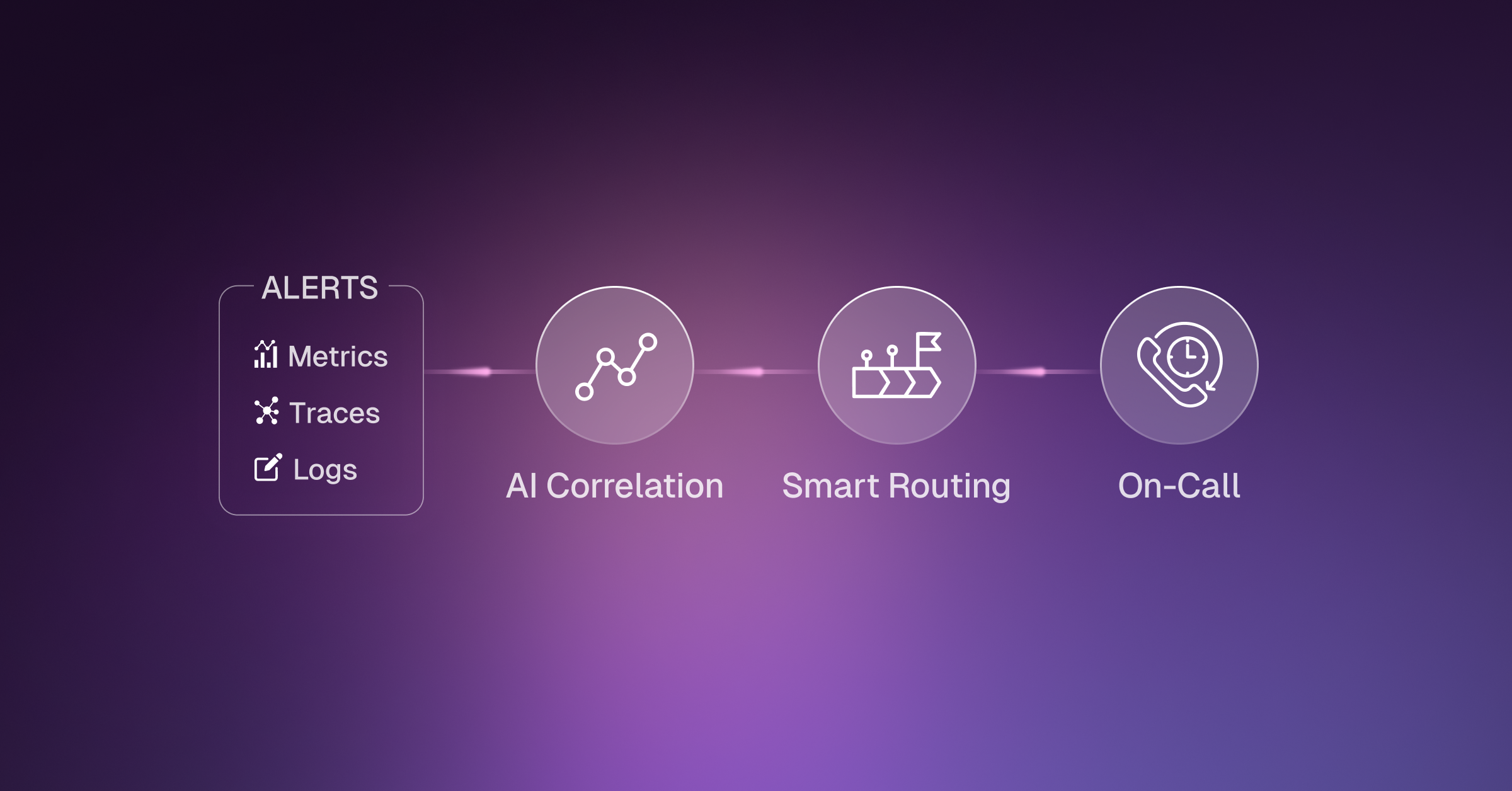
PagerDuty has evolved beyond traditional on-call management to incorporate AI-driven incident intelligence. Their AIOps capabilities focus primarily on alert aggregation and intelligent routing.
Strengths:
- Mature incident management workflows
- Strong integration ecosystem
- Excellent mobile alerting experience
- Event intelligence that reduces alert noise
Limitations:
- Limited automated remediation capabilities
- Primarily focused on alerting, not full observability
- Can be expensive at scale
- Requires separate tools for metrics and logs
Best For: Teams already invested in PagerDuty who want to add AI-powered alert correlation without changing their existing incident response processes.
Datadog Watchdog: AI-Powered Anomaly Detection
Datadog's Watchdog feature applies machine learning to detect anomalies across your infrastructure and applications. It's deeply integrated into Datadog's APM and infrastructure monitoring platform.

Strengths:
- Comprehensive monitoring across infrastructure and applications
- Strong visualization and dashboard capabilities
- Automatic anomaly detection without manual threshold configuration
- Rich integration with cloud providers
Limitations:
- Primarily a monitoring tool, not an incident management platform
- Limited automated remediation capabilities
- Pricing can become prohibitive at scale
- AI features require significant data history to be effective
Best For: Teams already using Datadog for APM who want to add AI-powered anomaly detection to their existing monitoring setup.
New Relic Applied Intelligence: ML-Powered Incident Correlation
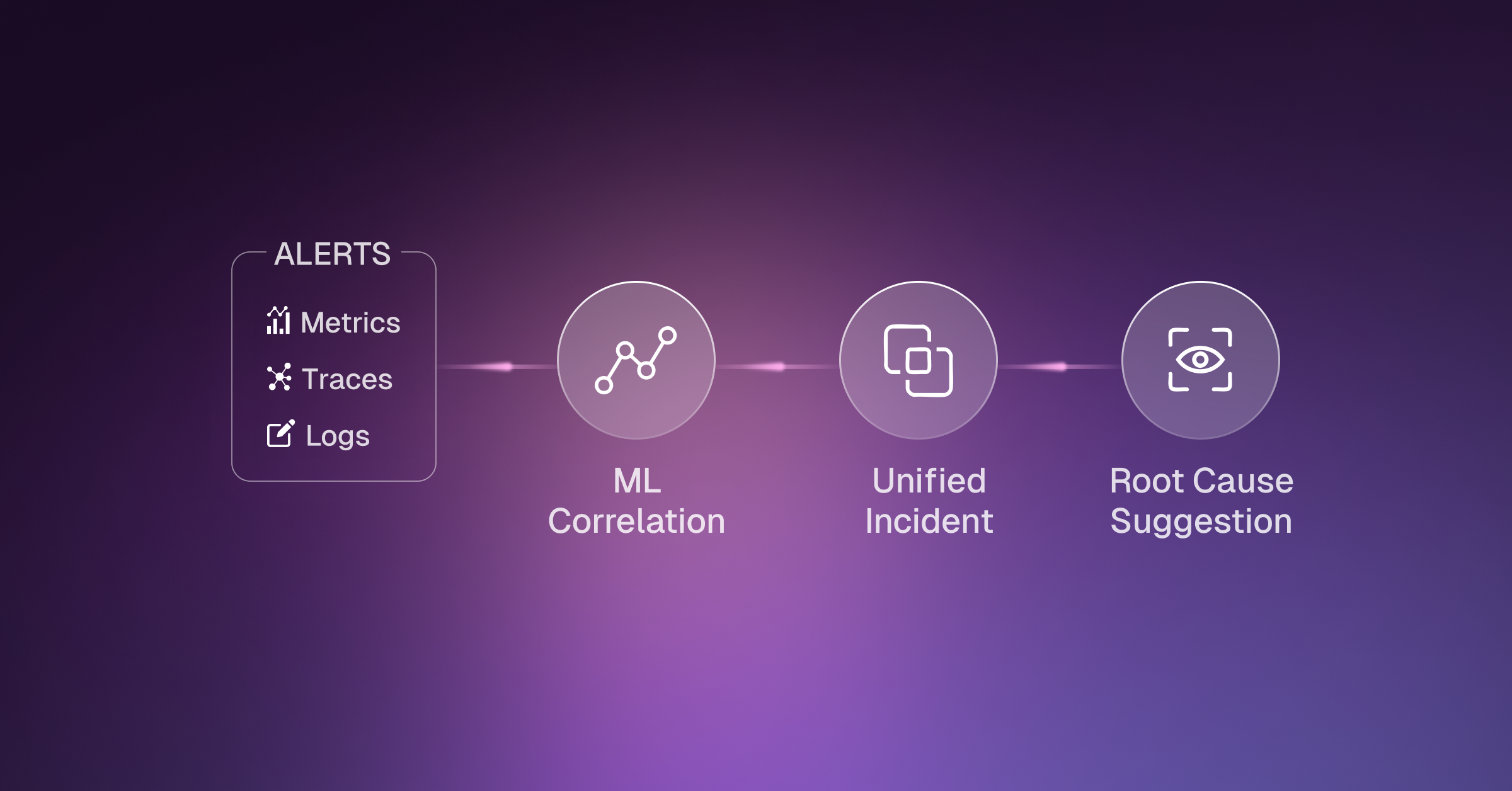
New Relic's Applied Intelligence uses machine learning to correlate incidents, reduce noise, and provide root cause suggestions across their observability platform.
Strengths:
- Strong application performance monitoring foundation
- Incident correlation across different signal types
- Good integration with New Relic's broader platform
- Useful for organizations standardized on New Relic
Limitations:
- Requires full New Relic stack for best results
- Limited automation beyond correlation
- Enterprise-focused pricing model
- Steep learning curve for complex deployments
Best For: Enterprise teams already using New Relic who want to enhance their existing investment with AI capabilities.
NudgeBee: Agentic CloudOps Platform with a Full-Loop AI SRE
NudgeBee is an agentic platform for cloud operations, running four AI assistants across SRE, FinOps, Kubernetes ops, and cloud ops. Its AI SRE covers the loop from investigation to remediation: it plans an investigation, runs real diagnostic commands against your own stack, returns a root cause with the evidence attached, then executes approval-gated remediation. It runs self-hosted with zero telemetry, and you can read the source and run it free, locally.
Strengths:
- Full loop from investigation to approval-gated remediation, not just triage
- Root causes arrive with cited evidence, not black-box verdicts
- Strongest on Kubernetes and multi-cloud environments
- Self-hosted with zero telemetry; readable source, free to run locally
- Customers see 70% lower MTTR and 30-40% lower cloud spend
Limitations:
- No built-in paging or on-call scheduling; it integrates with your existing alerting tools
- Newer entrant compared to legacy AIOps suites
- Advanced governance and scaling features sit in the commercial tier
Best For: Teams that want an AI SRE that investigates and remediates inside their own environment, with FinOps and Kubernetes optimization from the same platform.
Metoro: AI SRE Purpose-Built for Kubernetes
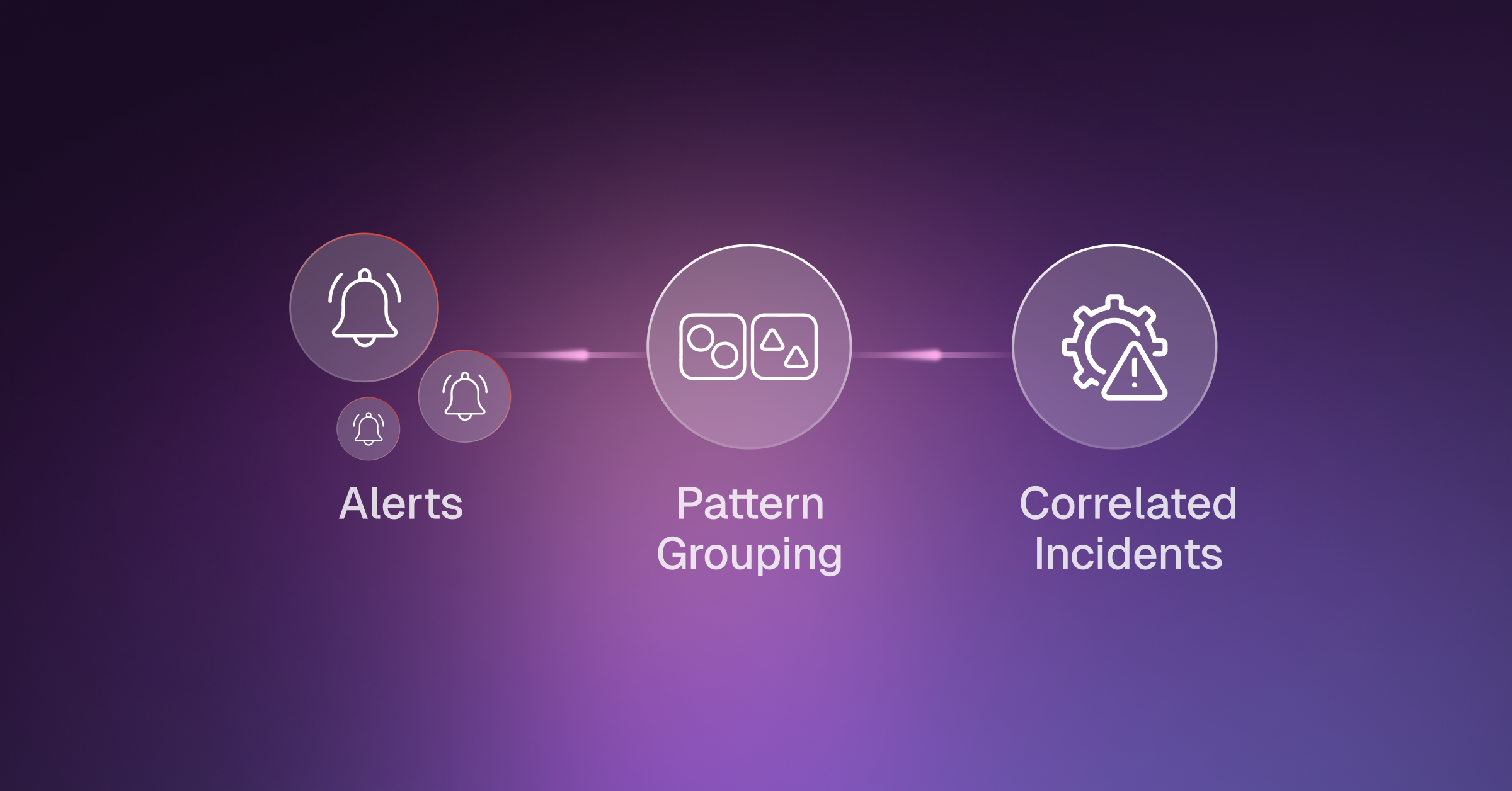
Metoro is an AI SRE platform designed specifically for Kubernetes environments. Rather than applying generic ML to alerts, Metoro uses eBPF kernel-level instrumentation to collect complete telemetry across every service in a cluster — without requiring code changes or container restarts. Its AI then uses this full-context signal to autonomously detect issues, investigate alerts, and generate fix suggestions.
Strengths:
- Kubernetes-native architecture with eBPF-based observability that requires zero instrumentation
- Autonomous issue detection from live traffic without predefined alert thresholds
- AI deployment verification that catches regressions immediately after rollout
- Node-based, transparent pricing ($20/node/month) with a free tier — significantly simpler than per-host enterprise APM pricing
- SOC 2 Type II certified; CNCF and Linux Foundation member
Limitations:
- Strictly Kubernetes-focused, not suitable for teams with hybrid or legacy infrastructure
- AI features currently rely on OpenAI models, which may be a constraint for air-gapped or compliance-sensitive environments (though on-prem is available at the enterprise tier)
- Newer entrant with a smaller integration ecosystem compared to established AIOps platforms
- Less mature incident management workflow tooling relative to purpose-built platforms like PagerDuty
Best For: Cloud-native teams running Kubernetes who want AI-powered issue detection and deployment verification with minimal setup overhead. Particularly well-suited for teams that have outgrown basic alerting but don't need (or can't afford) a full enterprise AIOps platform.
Sherlocks AI: Autonomous Multi-Agent Incident Investigation
Sherlocks AI is an autonomous AI SRE platform that investigates incidents the moment an alert fires without waiting for a human to kick off the process. Rather than a single generalist model, it dispatches 16+ domain-specialized agents in parallel (Database Sherlock, Kubernetes Sherlock, and others), each inspecting a different layer of your stack simultaneously. Findings land in Slack or Teams within 2–6 minutes, with root cause, supporting evidence, and recommended next steps. Its Watson data agent runs inside your own VPC with read-only permissions, so raw telemetry never leaves your environment.
Strengths:
- 16+ parallel specialized agents cover infrastructure, application, database, and Kubernetes layers simultaneously
- Most alerts investigated within 2–3 minutes; complex multi-service incidents within 5–6 minutes
- Complements existing observability tools (Datadog, New Relic, Prometheus, Sentry, Coralogix, Loki) rather than replacing them
- Watson agent runs in-VPC with read-only permissions; SOC 2 Type II certified; supports air-gapped deployments
- Setup in under 30 minutes; integrates with PagerDuty, Slack, and Teams out of the box
Limitations:
- Primarily an investigation and RCA tool — automated remediation is limited compared to platforms like StackGen or NudgeBee
- $500/month Pro tier after a 1-month free trial; no permanent free tier for production use
- Works best when your observability stack is already instrumented; value is lower on sparse or inconsistent telemetry
Best For: Teams that want autonomous incident investigation delivered into their existing Slack/Teams workflow, without replacing their current observability stack. Particularly strong for organizations with complex multi-service environments where parallel agent investigation shortens time-to-root-cause significantly.
BigPanda: Event Correlation and Automation
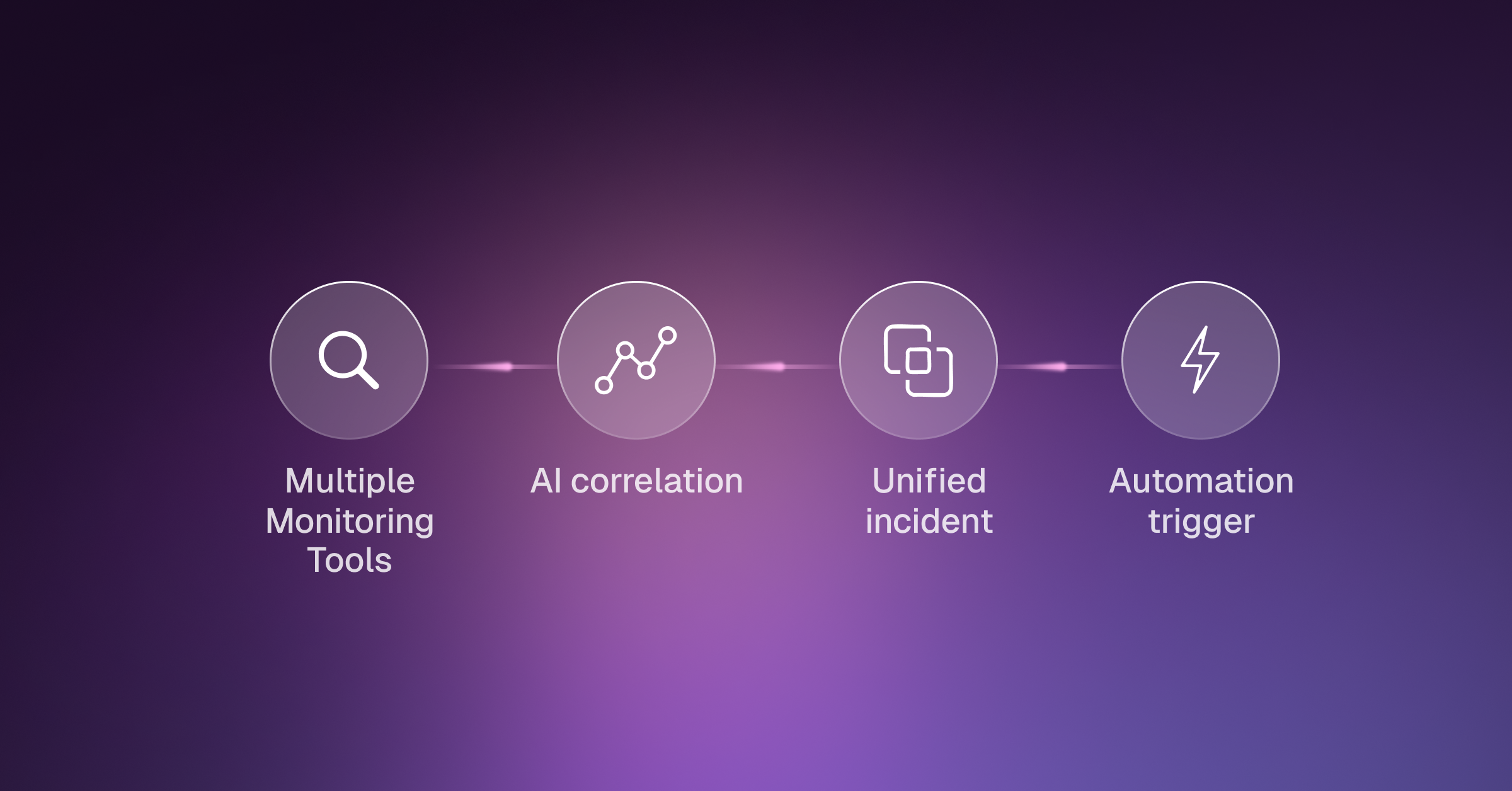
BigPanda specializes in event correlation and incident automation, focusing on reducing alert noise and accelerating incident response through AI-powered event intelligence.
Strengths:
- Strong event correlation capabilities
- Good integration with existing monitoring tools
- Focus on reducing alert fatigue
- Enterprise support and reliability
Limitations:
- Primarily an incident management layer, not full observability
- Limited automated remediation capabilities
- Requires other tools for metrics and logs
- Can be complex to configure optimally
Best For: Organizations with multiple existing monitoring tools who need a unifying incident management layer with AI-powered correlation.
Dynatrace Davis AI: Full-Stack AI Analysis
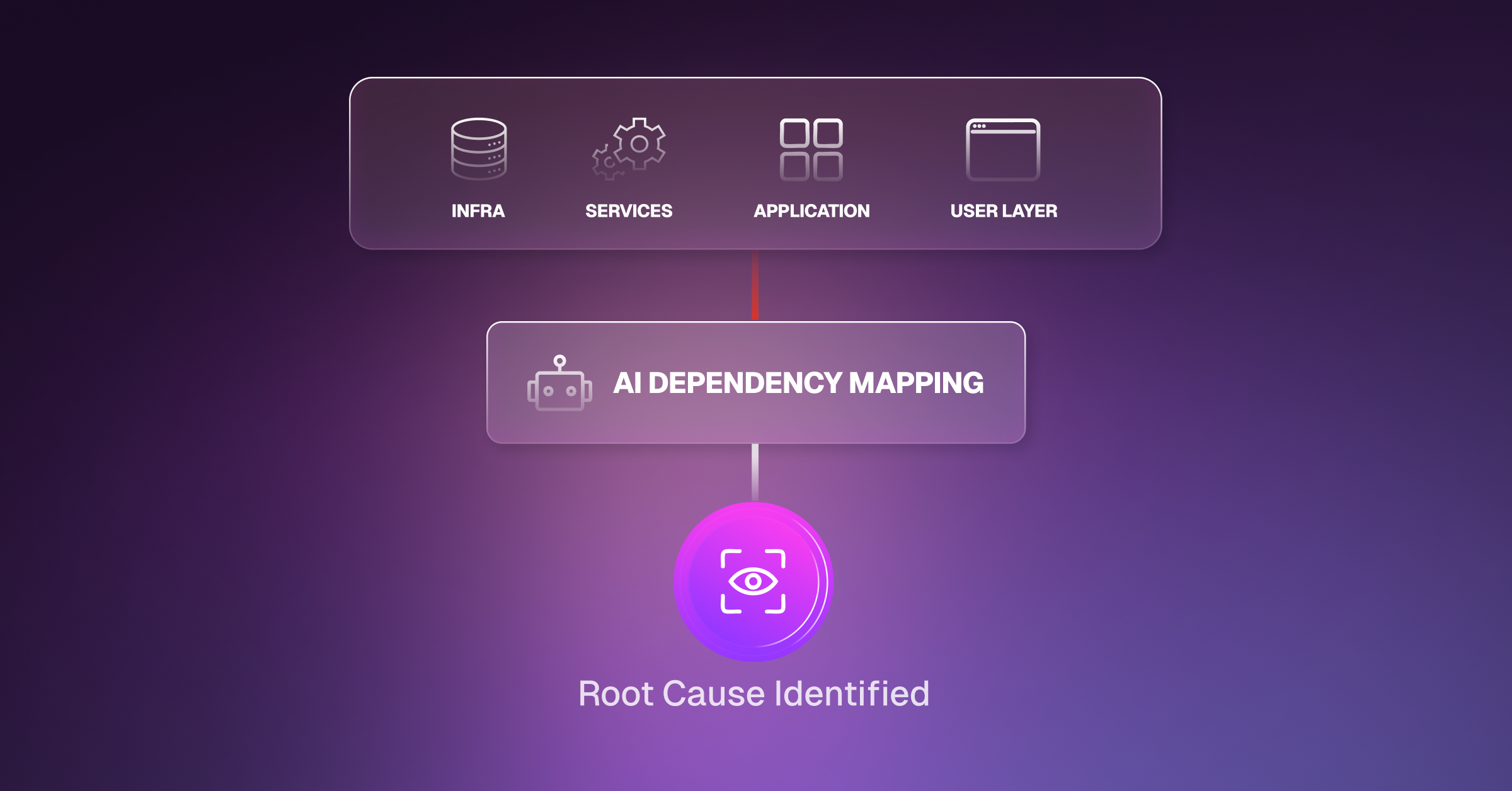
Dynatrace's Davis AI engine provides automatic root cause analysis across the full application stack, from infrastructure to user experience.
Strengths:
- Automatic dependency mapping and root cause analysis
- Full-stack observability coverage
- Strong for application performance monitoring
- Automatic baseline learning without manual configuration
Limitations:
- Premium pricing limits accessibility
- Best results require full Dynatrace deployment
- Complex for simpler use cases
- Enterprise-focused feature set
Best For: Large organizations requiring comprehensive APM with AI-powered analysis who can justify the premium investment.
Rootly: AI-Native Incident Management Platform
Rootly is a comprehensive incident management platform that embeds AI across the entire incident lifecycle — from detection and triage through resolution and post-mortem. Where most tools in this list focus on observability or root cause analysis, Rootly's strength is the incident workflow itself: it runs inside Slack and Microsoft Teams, automates the coordination work that slows teams down during active incidents, and uses AI to handle summarization, status updates, and retrospective writing so engineers can focus on fixing rather than filing.
Strengths:
- Slack and Teams-native workflow — engineers manage the full incident without leaving their existing communication tools
- "Ask Rootly AI" allows conversational incident investigation in natural language, surfacing context from across your stack on demand
- Automated incident summaries, status page updates, and post-mortem drafts reduce the documentation burden during and after incidents
- Built-in on-call scheduling and escalation policies, eliminating the need for a separate PagerDuty-style tool
- Strong customer proof points with named references — Webflow, Wealthsimple, Replit, and others report significant MTTR reductions
Limitations:
- Primarily an incident management and coordination layer — deep infrastructure-level RCA requires integrations with Datadog, Prometheus, or similar tools
- Less suitable for teams that want autonomous remediation; Rootly keeps humans in the decision loop by design
- Pricing is per-user and can grow with team size; less predictable for larger organizations than node-based models
Best For: Engineering teams that want to unify on-call, incident response, and post-mortems in a single Slack-native platform with AI handling the coordination and documentation overhead. A natural upgrade path for teams outgrowing PagerDuty or Opsgenie who want AI baked in rather than bolted on.
Choosing the Right AI SRE Tool for Your Team
Selecting the right AI-powered SRE tool depends on your specific needs, existing infrastructure, and team size. Here's a framework to guide your decision:
For Cloud-Native Teams (Kubernetes, Microservices)
Recommendation: StackGen
We built our platform specifically for cloud-native infrastructure. Our Kubernetes-native architecture, GitOps integration, and automated remediation are purpose-built for modern distributed systems. Teams running containerized workloads see the fastest time-to-value with StackGen.
For Enterprise Teams with Legacy Infrastructure
Recommendation: Moogsoft or Dynatrace
These platforms excel in heterogeneous environments mixing legacy and modern infrastructure. Their enterprise-grade scalability and extensive integration catalogs handle complex organizational needs.
For Application-Centric Monitoring
Recommendation: Datadog or New Relic
If your primary focus is application performance monitoring with AI enhancements, these APM-first platforms provide strong capabilities. Be prepared for additional tools to handle infrastructure observability and automated remediation.
For Incident Management Enhancement
Recommendation: PagerDuty or BigPanda
Teams satisfied with their existing monitoring but seeking better incident correlation and intelligent alerting can add these tools as a layer on top of current infrastructure.
Key Evaluation Criteria
When evaluating AI SRE tools, consider these factors:
1. Depth of AI Capabilities Does the tool just correlate alerts, or does it provide automated remediation? Can it learn your specific environment, or does it apply generic ML models?
2. Integration Ecosystem Will it work with your existing tools (Prometheus, Grafana, Jenkins, Kubernetes)? How difficult is the integration process?
3. Time to Value How long until you see measurable improvements in MTTR and alert quality? Does the AI require months of data to be effective?
4. Total Cost of Ownership Beyond license costs, consider implementation effort, ongoing maintenance, and required staffing. Tools that reduce operational burden provide better ROI.
5. Vendor Lock-In Can you export your data? Will you be dependent on proprietary formats or APIs? Modern teams prefer platforms built on open standards.
The Future of AI in Site Reliability Engineering
The trajectory for AI-powered SRE tools is clear: we're moving from reactive monitoring to proactive reliability engineering. The next wave of innovation will focus on:
Predictive Reliability: AI models that predict failures before they occur, enabling preventive action rather than reactive response. We're already seeing early versions of this capability in our Aiden AI Copilot's anomaly prediction features.
Self-Healing Infrastructure: Systems that automatically detect, diagnose, and remediate issues without human intervention. The goal isn't to eliminate SREs, but to free them from toil so they can focus on reliability engineering rather than incident response.
Natural Language Operations: SREs will increasingly interact with infrastructure through conversational interfaces. Instead of writing complex queries, you'll ask "Why is the checkout service slow?" and get instant, AI-powered analysis. StackGen's Intent-to-Infrastructure platform is pioneering this approach.
Cross-Team Collaboration: AI that connects SRE insights with development and product teams, creating shared understanding of reliability issues and their business impact.
Conclusion
AI-powered SRE tools have moved from experimental to essential. Teams that adopt intelligent observability and automated remediation see measurable improvements in reliability metrics, engineering productivity, and operational costs. The question isn't whether to adopt AI for SRE, but which tool best fits your needs.
We built StackGen because we believe SREs deserve better than the status quo. Traditional monitoring tools generate noise. Legacy AIOps platforms require months of tuning. DIY observability stacks consume engineering resources that should be focused on product innovation. StackGen delivers intelligent, automated, and unified site reliability engineering from day one.
Key Takeaways:
- AI-powered SRE tools reduce MTTR by 40-60% through automated root cause analysis and remediation
- Choose tools based on your infrastructure type (cloud-native vs. hybrid), team size, and automation goals
- StackGen leads the market for cloud-native teams seeking comprehensive observability with intelligent automation
- The future of SRE is proactive, predictive, and conversational—powered by purpose-built AI
Ready to transform your site reliability engineering? Start your free StackGen trial and experience AI-powered observability built for modern infrastructure. Our team will help you deploy in under 30 minutes and see measurable MTTR improvements in your first week.