

Share This:
Introduction
This post breaks down the 12 AI-powered DevOps tools that matter most in 2026: what they do, what pain they actually solve, and how they fit together into a stack that ships faster and stays reliable.
Before we dive in, let's identify why revisiting your tooling from an AI perspective is so important in 2026.
Six months ago, your team adopted GitHub Copilot. Dev velocity is up 40%. Engineers are writing code faster than ever.
And your deployment queue just got longer.
The bottleneck didn't disappear; it moved. Developers can produce code faster, but infrastructure provisioning still runs on tickets and wait times. CI/CD pipelines still need a human to babysit a 45-minute run. On-call rotations are still burning through senior engineers at $250K a year to do work that should be automated. Your cloud bill keeps growing 30% year-over-year while traffic grew 10%, and nobody can explain the gap.
This is the Copilot Paradox: AI coding tools solved one problem while exposing every bottleneck downstream. The teams winning in 2026 aren't just using AI to write code faster. They're using AI across the entire operational lifecycle, infrastructure generation, deployment, intelligence, observability, and incident response, so the whole system moves, not just the developer's cursor.
The Real Cost of Not Automating
Before we get to the tools, it's worth being honest about what's at stake.
The average P1 incident takes 4 hours to resolve. The first 90 minutes are just getting the right people in a room and agreeing on what's broken. Root cause analysis becomes a week-long archaeology project, digging through 6 different tools to reconstruct a timeline. On-call rotation has become the #1 reason engineers leave teams — not the hours, but the chaos.
Meanwhile, platform teams are buried. Developers wait 3–5 days for infrastructure changes because every request flows through a ticket queue into a repo nobody outside the platform team understands. IaC backlogs grow. New engineers take 3 weeks to make their first infrastructure change. Platform teams built to be enablers have become bottlenecks.
AI-powered DevOps tools don't solve these problems by adding another dashboard. They solve them by taking over the repetitive, rule-based work — the 200 runbooks nobody has time to keep current, the Terraform boilerplate that takes half a sprint to write, the alert noise where 400 pages fire and 10 are actionable — and giving engineers back the time to do work that actually requires their expertise.
Here's the toolkit for 2026.
i. StackGen — AI-Powered Intent-to-Infrastructure Platform
Category: Infrastructure Automation / Pipeline Management / AI SRE / Observability
Most AI DevOps tools solve one problem. StackGen was built to use AI agents to help manage the whole lifecycle after application code because the bottlenecks don't live in one place.
Start with infrastructure. Platform teams are drowning. Every developer environment, every new service, every infrastructure change flows through a ticket into a repo that requires a platform engineer to hand-hold the process. Aiden for Infrastructure changes that equation directly. Describe what you need in plain English: "a production-ready Kubernetes cluster with autoscaling, multi-region failover, and SOC 2 compliant networking," and Aiden generates validated, policy-compliant Terraform, ready for review and merge. No boilerplate. No waiting. Teams report a 60% reduction in time-to-environment for developer requests. Platform engineers stop being a bottleneck and start being a multiplier.
But generating infrastructure is only half the problem. The other half is keeping it from drifting. Someone applies a manual kubectl patch. A node gets replaced with a different size. A security team makes an emergency change that never makes it back into code. StackGen's AI drift monitoring engine continuously detects this divergence and reconciles it automatically, proposing or applying corrections before it causes an incident. StackGen’s Aiden for Pipelines helps configure and troubleshoot CI/CD pipelines.
On the reliability side, StackGen's AI SRE agent executes validated remediation runbooks the moment known failure patterns are detected without waiting for a human to wake up, triage, and decide. Combined with ObserveNow — StackGen's unified observability layer that correlates metrics, logs, and traces in a single context, the AI has full-stack visibility before it acts. The result: MTTR reduced by up to 55%, and alert volume cut by 70% because the system knows the difference between a signal and noise.
This is what "AI across the full lifecycle" actually means. Not a chatbot. Not a dashboard. A platform that takes the work off your engineers' plates at every stage of the SDLC after app development.
Best for: Platform engineering teams, SREs, observability teams, and DevOps engineers operating cloud-native infrastructure at scale.
Key capabilities:
- Natural language → validated IaC (Terraform, Helm, K8s manifests) with policy enforcement at generation time
- Multi-cloud support: AWS, Azure, GCP
- Pipelines: configuration and troubleshooting
- AI remediation agent: automated incident response with rollback capability and approval workflows for sensitive actions
- Observability: unified, managed open source observability with multi-signal correlation (metrics + logs + traces)
- AI drift monitoring: continuous infrastructure state detection and auto-correction
ii. GitHub Copilot — AI Code and Workflow Assistant
 Category: Developer Productivity / CI/CD
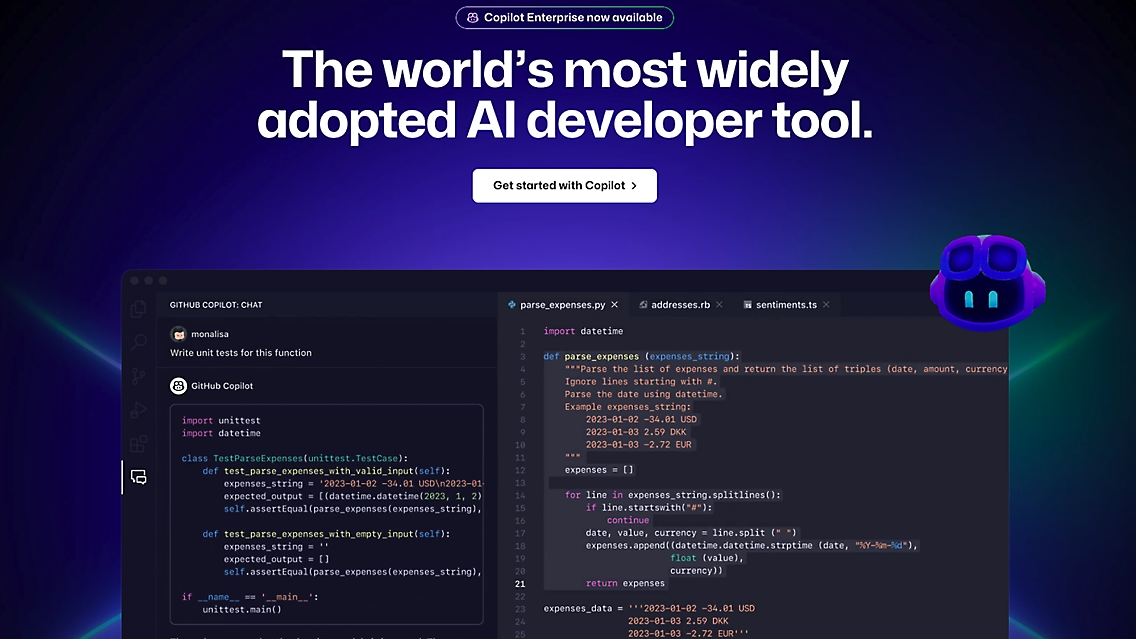
GitHub Copilot is where the Copilot Paradox begins, and it's still the right place to start. By 2026, it's embedded far deeper than code completion. Copilot Autofix catches security vulnerabilities in pull requests and auto-generates remediation patches before code ever reaches a reviewer. AI-generated PR summaries mean reviewers actually understand what changed. Natural language → GitHub Actions workflow generation means fewer engineers copy-pasting YAML they don't fully understand.
The honest assessment: Copilot makes developers faster at writing code. It doesn't make infrastructure faster, deployment safer, or on-call less painful. Treat it as the starting point of your AI stack, not the destination.
Best for: Engineering teams standardized on GitHub wanting to accelerate developer velocity at the code layer.
Key capabilities:
- AI-powered code completion and generation across all major languages
- Copilot Autofix: automated vulnerability remediation in PRs with generated patches
- Natural language → GitHub Actions workflow generation
- AI-assisted code review and PR summarization
iii. Harness AI — Intelligent Software Delivery Platform
 Category: CI/CD / Release Automation
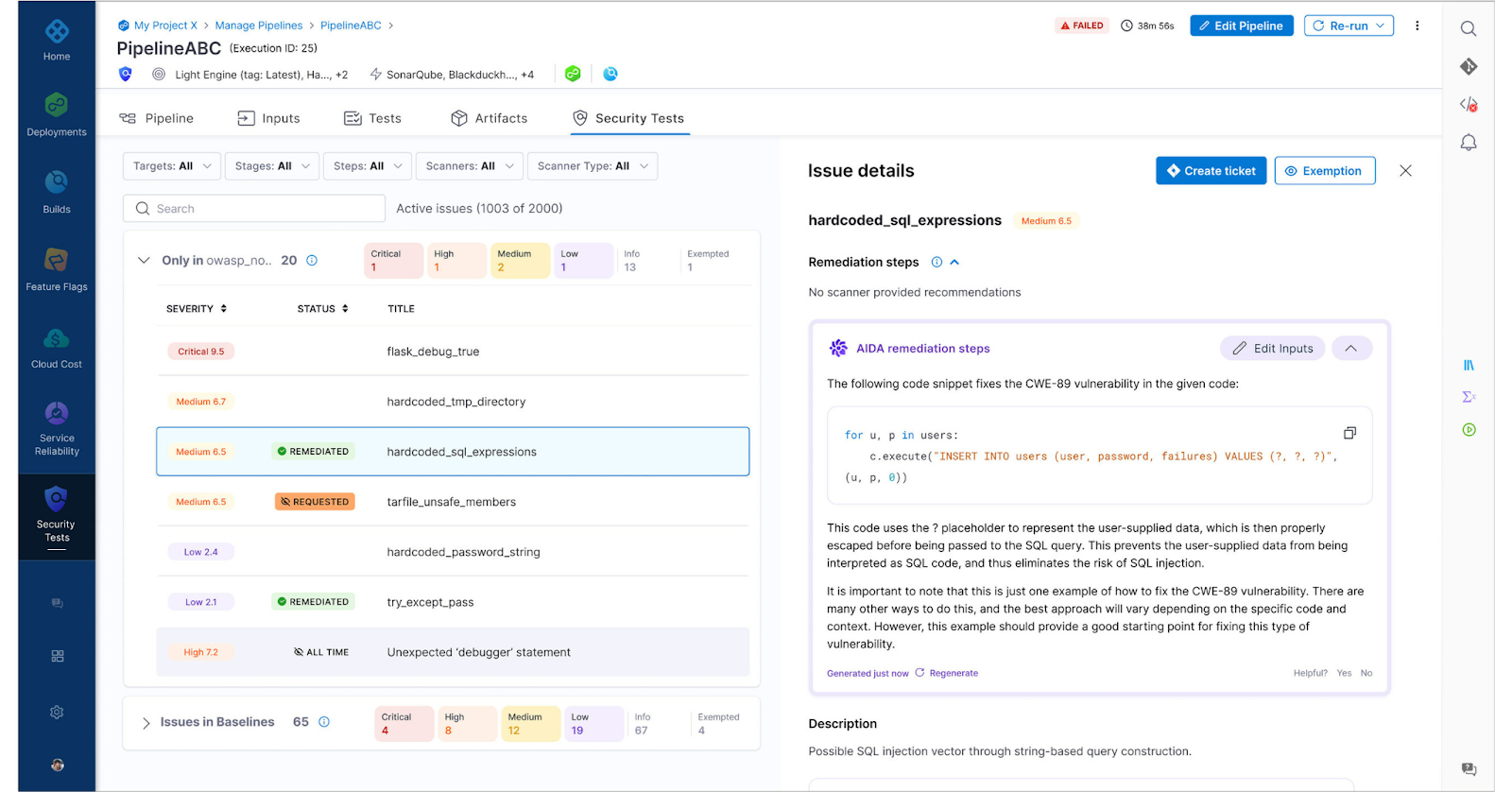
Half of the incidents are caused by the deployment process itself, not by the code being deployed. Harness attacks that problem directly. Its AI Development Assistant (AIDA) analyzes the specific code changes in a PR to predict which tests are actually relevant — not running 400 tests when 30 matter — and identifies flaky tests that have been silently corrupting your pipeline confidence for months. More critically, Harness evaluates deployment risk in real time, recommending canary rollout or automatic rollback before a bad release reaches production users.
For teams where a failed deployment still means 45 minutes of supervised pipeline babysitting followed by an hour of rollback archaeology, Harness is where that time comes back.
Best for: Mid-to-large engineering orgs that need enterprise-grade CI/CD with AI-driven deployment risk management.
Key capabilities:
- Predictive test selection based on change impact analysis (run what matters, skip what doesn't)
- AI-powered deployment risk scoring with canary/rollback recommendations
- Flaky test identification and quarantine
- Root cause analysis surfaced directly in the pipeline UI
iv. Datadog — AI-Augmented Monitoring and Observability
 Category: Observability / AIOps
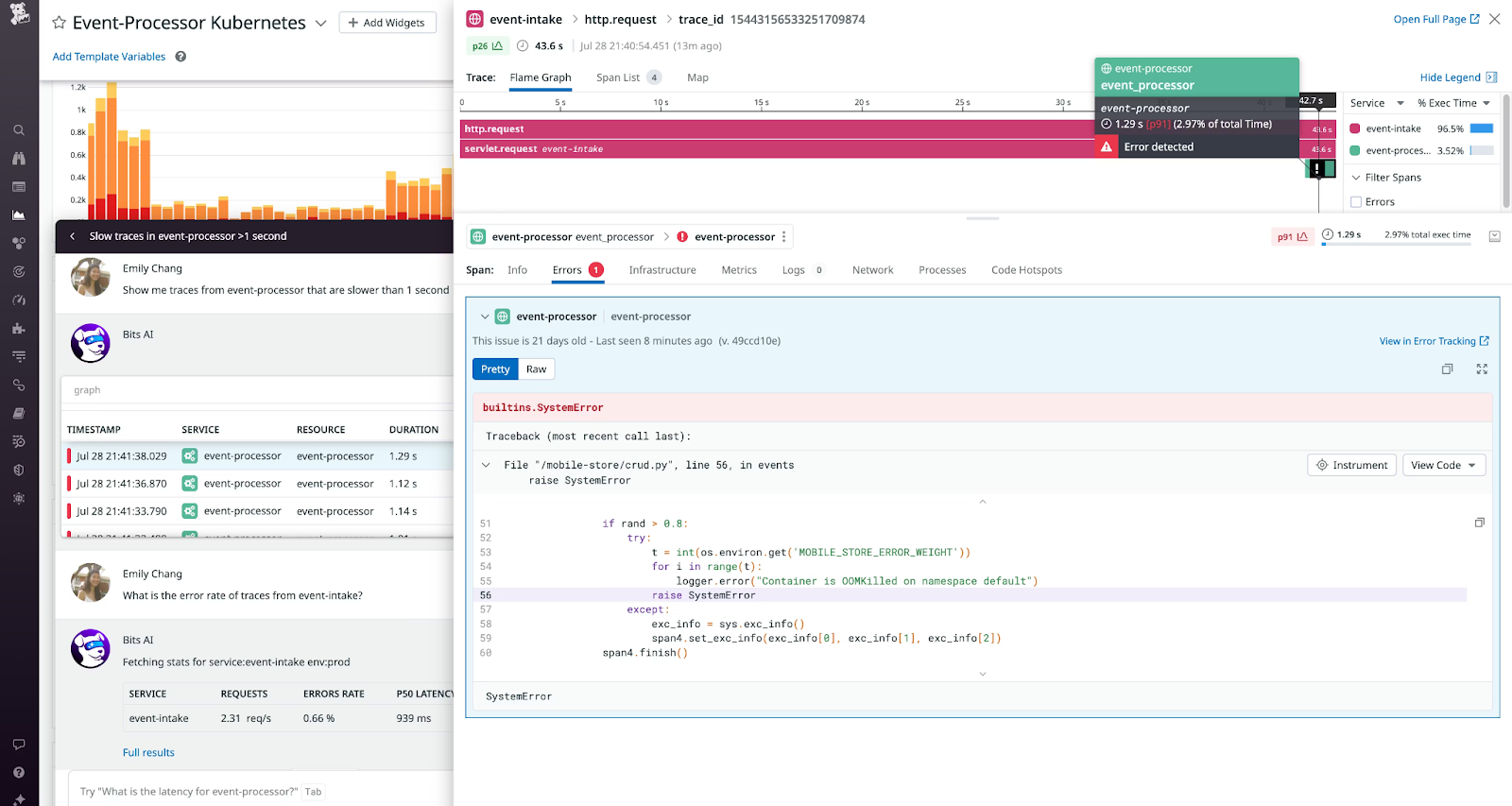
Datadog's Watchdog continuously scans your telemetry for anomalies and generates natural language incident summaries that give on-call engineers a starting point instead of a blank screen at 3 AM. The Bits AI assistant lets teams query logs, traces, and dashboards in plain English — useful when you're mid-incident and don't want to remember PromQL syntax. Recent releases have added AI-generated runbook suggestions tied to active incidents.
Datadog excels at breadth. If you need visibility across applications, infrastructure, and security in a single vendor relationship, it covers more ground than almost anything else. Where it falls short for cloud-native teams at scale: it monitors and alerts well, but it doesn't act. When you need remediation — not just awareness — you'll still need humans or an additional tool.
Best for: Organizations with complex, multi-service architectures that need broad observability coverage with AI-assisted triage.
Key capabilities:
- Watchdog anomaly detection across metrics, logs, and APM traces
- AI-generated incident summaries and root cause hypotheses
- Bits AI: natural language querying of observability data
- Automated SLO burn rate alerts with predictive forecasting
v. Dynatrace — Autonomous Cloud Observability
 Category: Observability / AIOps
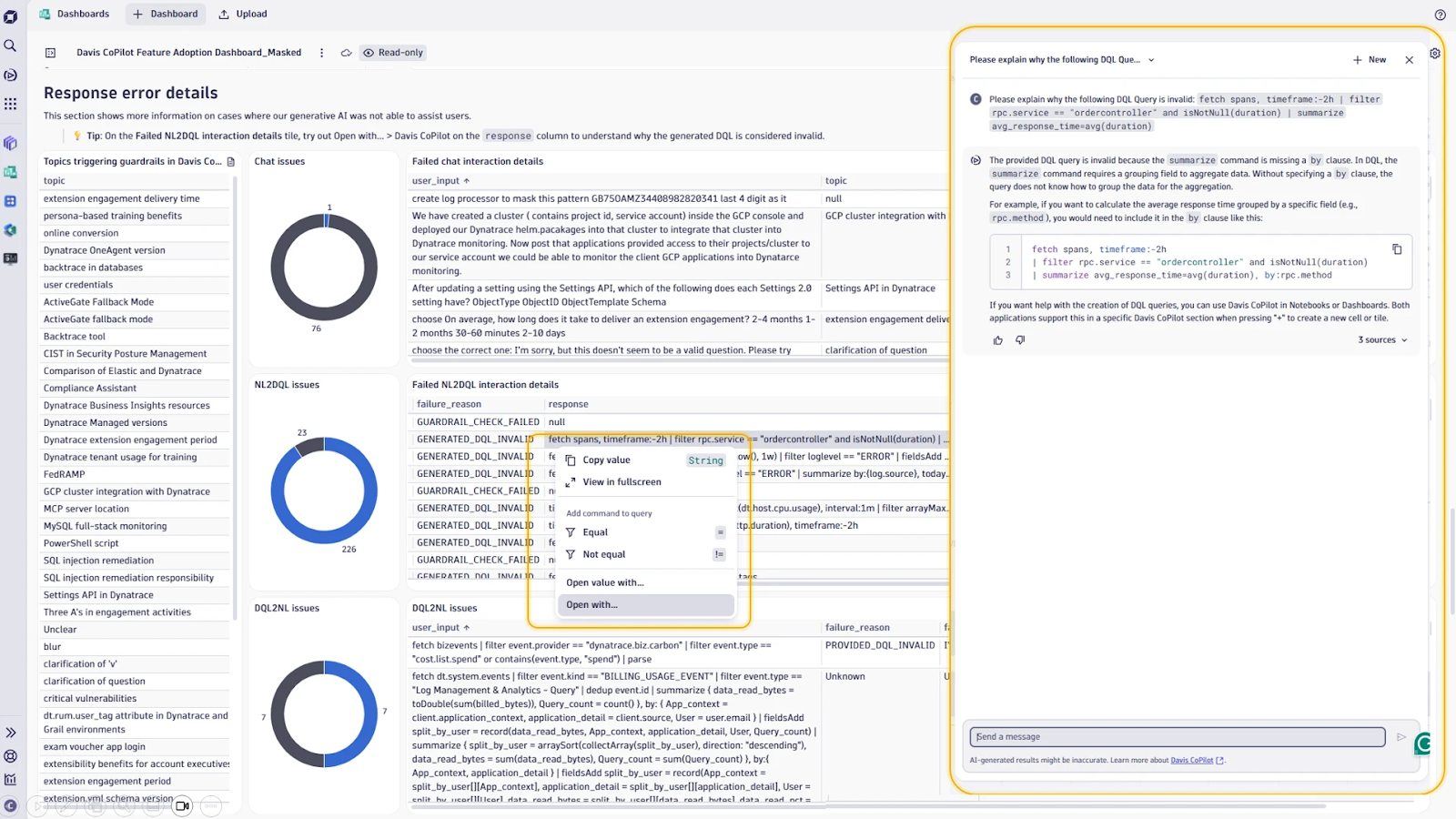
Dynatrace's Davis AI does something most observability tools can't: it identifies the cause of a problem, not just the symptom. Its topology-aware causal AI maps the dependency chain across thousands of services — so when a payment service latency spike fires, Davis doesn't just show you the spike. It traces back through the chain and tells you which downstream database connection pool exhausted first. That's the difference between a 90-minute war room and a 15-minute fix.
Davis CoPilot extends this into natural language querying and workflow automation — useful for teams who want to operationalize these insights without writing custom query logic.
Best for: Large enterprises with complex microservice topologies where identifying root cause across thousands of dependencies is the core challenge.
Key capabilities:
- Causal AI that traces failure origins through full dependency chains, not just symptom detection
- Automated problem detection with precise root cause identification
- Davis CoPilot for natural language querying and workflow automation
- Continuous baseline learning per entity (not static thresholds that cry wolf)
vi. PagerDuty AIOps — Intelligent Incident Triage
 Category: Incident Management / AIOps
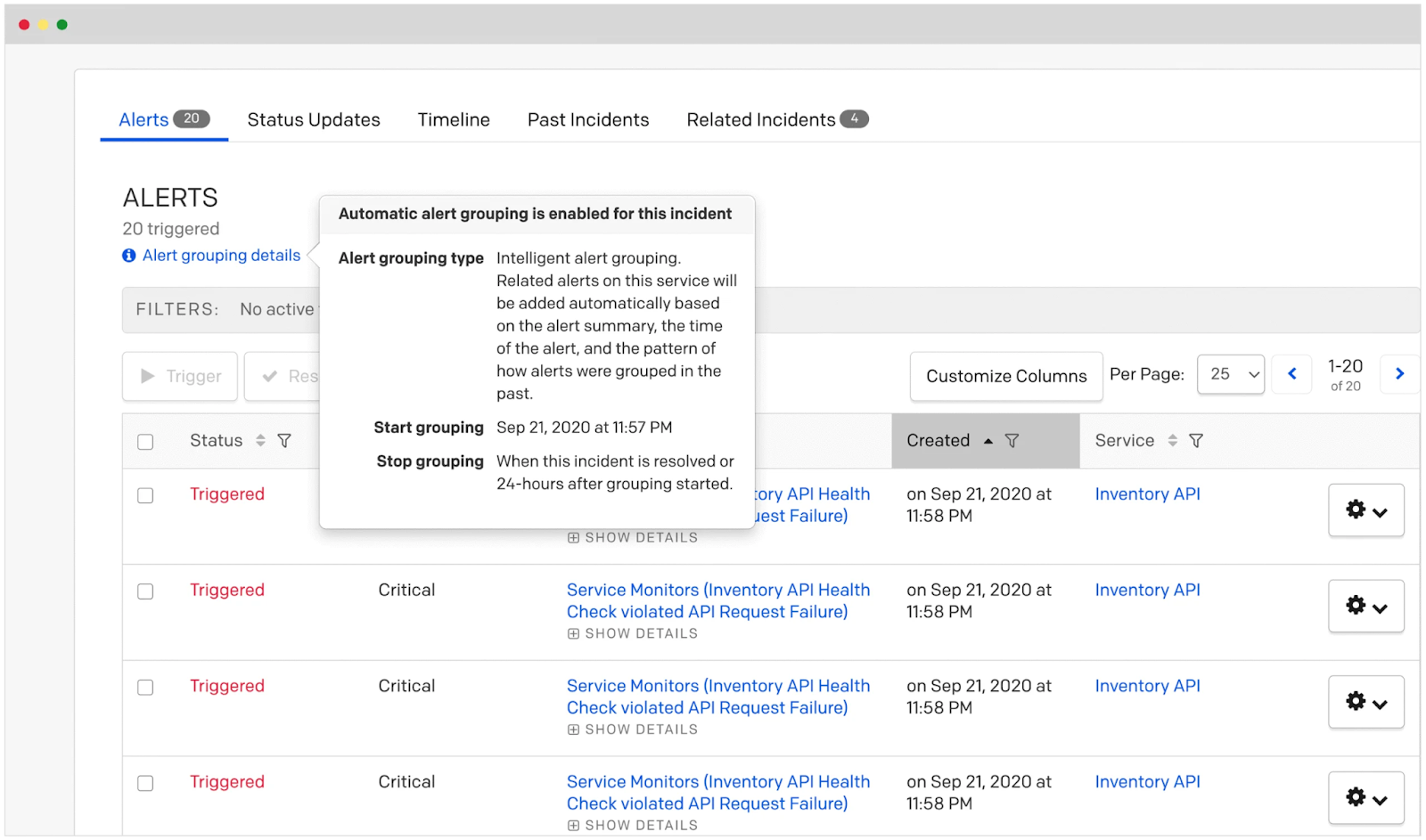
Getting 400 alerts a day and 10 are actionable is not a monitoring problem. It's a signal-to-noise problem, and it's training your team to ignore alerts — which means the one that matters gets ignored too. PagerDuty's Event Intelligence module uses ML to group related alerts into a single incident context, suppressing duplicates and noise so the right responder gets one page, not forty. It then routes that page intelligently based on service ownership, schedule, and historical resolution patterns.
The gap to know: PagerDuty correlates and routes well. It doesn't remediate. For teams where the real pain is the time between the alert and the fix — not just receiving fewer alerts — PagerDuty works best alongside an auto-remediation layer like StackGen's AI remediation agent.
Best for: On-call teams dealing with high alert volumes who need intelligent noise reduction and faster responder routing.
Key capabilities:
- ML-based alert correlation and noise suppression across all monitoring sources
- Intelligent incident grouping — many alerts, one incident context
- AI-generated incident timelines and impact summaries
- Automated escalation and stakeholder notification workflows
vii. Pulumi AI — Natural Language Infrastructure Generation
 Category: Infrastructure as Code
Pulumi takes a different angle on the IaC problem than traditional declarative tools. Instead of YAML or HCL templates, you write infrastructure in real programming languages — TypeScript, Python, Go, C# — with the full power of loops, conditionals, and abstractions. Pulumi AI generates this code from natural language, which is especially powerful for teams that already think in code and find Terraform's declarative model limiting.
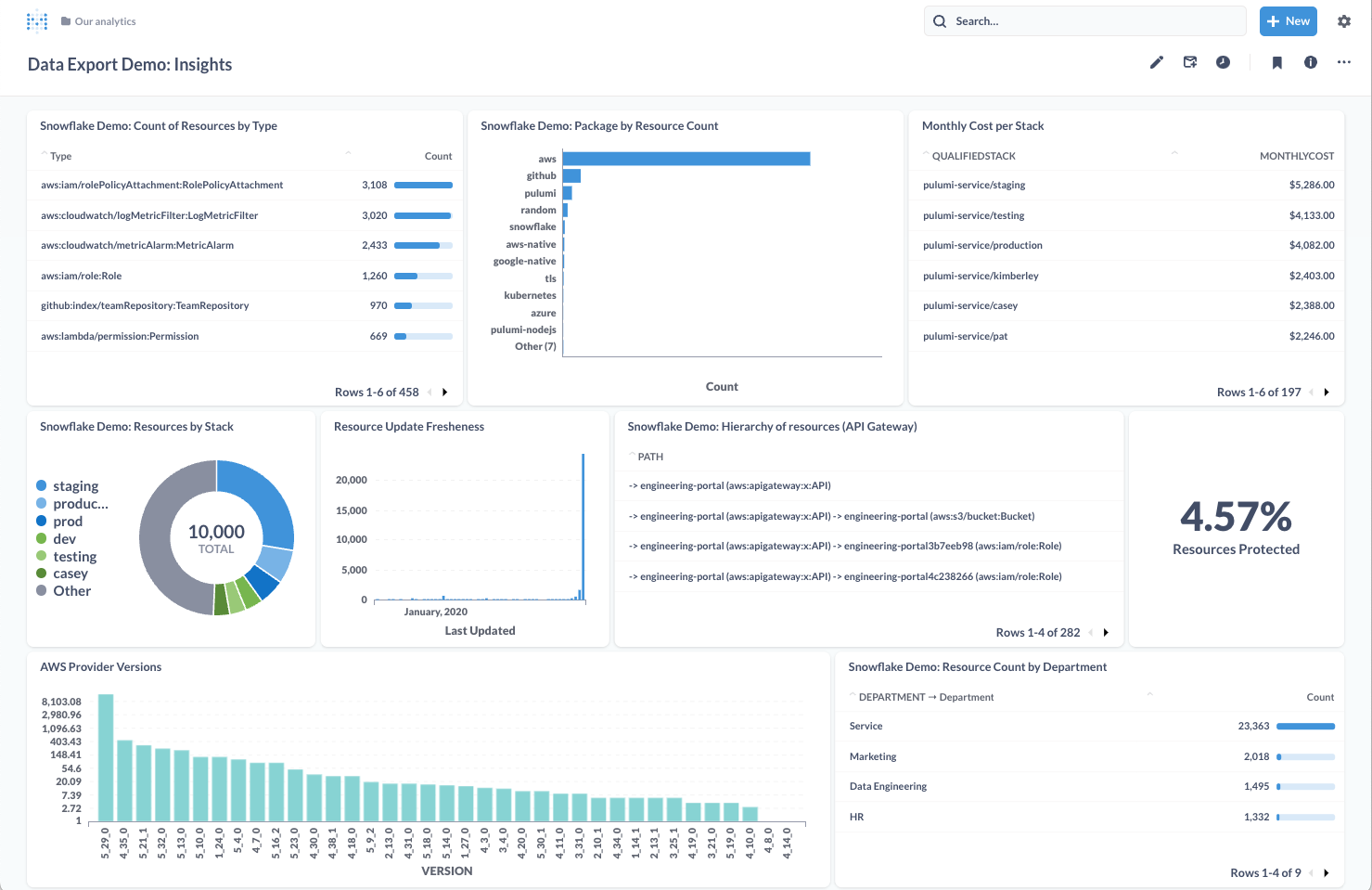
Pulumi Insights adds AI-powered resource discovery and cost analysis across your cloud footprint — useful for teams that have accumulated cloud resources over the years and lost track of what's actually running.
Best for: Developer-led teams that prefer programming-language-native IaC and want the flexibility of a real programming language for infrastructure logic.
Key capabilities:
- Natural language → infrastructure code in TypeScript, Python, Go, C#
- AI-assisted refactoring and modernization of existing IaC
- Pulumi Insights for AI-powered resource discovery and cost analysis
- Full programming language capabilities: loops, conditionals, abstraction, testing
viii. Snyk — AI-Powered Developer Security
Category: DevSecOps / Shift-Left Security
Security teams mandating policy-as-code with a 60-day deadline is a common story. So is failing an audit because you couldn't prove who approved an infrastructure change 6 months ago. Snyk addresses both problems at the developer layer, before code reaches production.
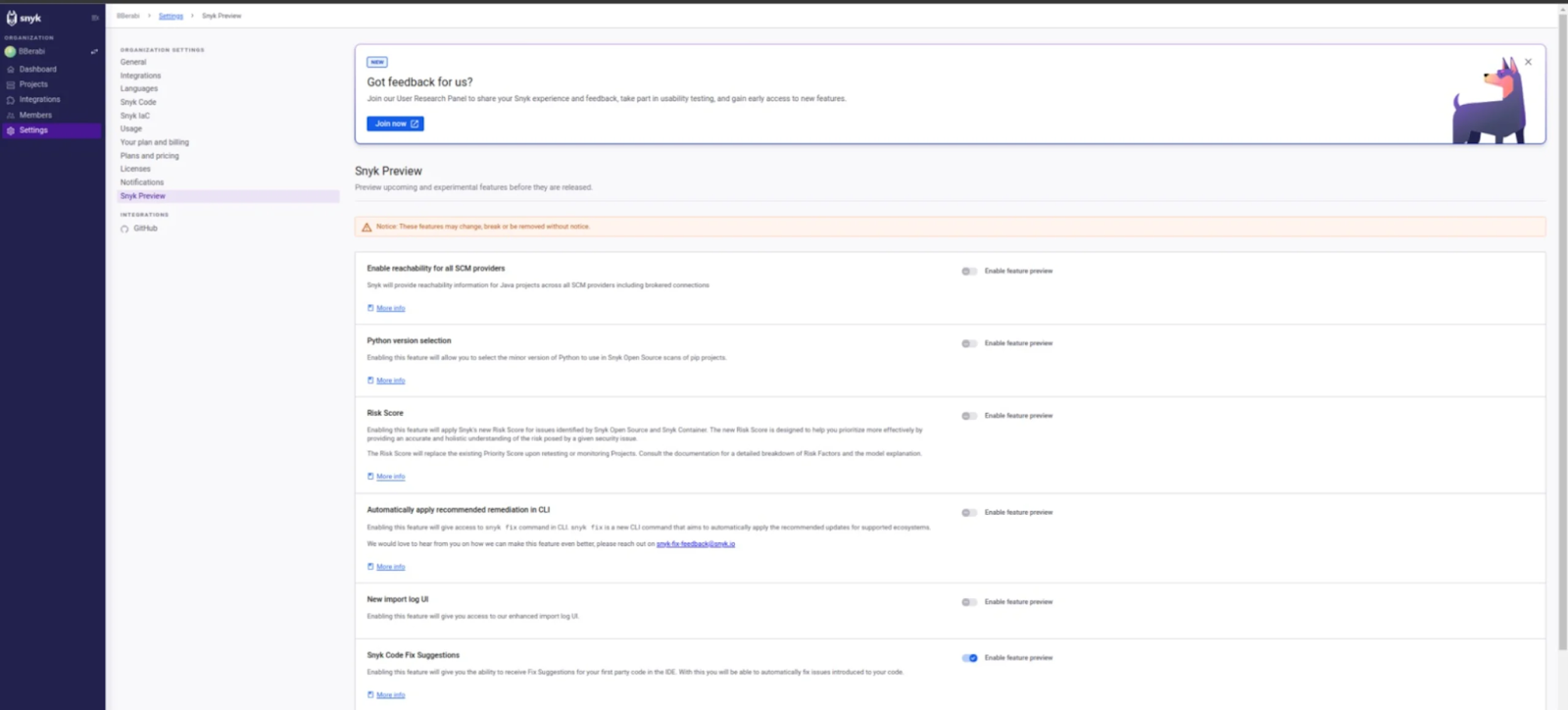
DeepCode AI Fix doesn't just flag vulnerabilities — it generates the actual remediation patch, surfaced directly in the IDE or PR workflow. The fix is one click. Critically, Snyk's vulnerability prioritization is context-aware: it distinguishes genuinely exploitable vulnerabilities from theoretical ones based on your actual code paths and dependency graph, so security teams stop drowning engineers in CVE noise that doesn't apply to their actual runtime.
Best for: Engineering teams that need security embedded in the developer workflow without creating review bottlenecks or shipping delays.
Key capabilities:
- Contextual risk scoring based on reachability analysis — exploitable vs. theoretical
- DeepCode AI Fix: auto-generated remediation patches in the IDE and PRs
- AI-powered IaC misconfiguration detection (Terraform, Helm, Kubernetes)
- Audit trail for compliance frameworks (SOC 2, ISO 27001, PCI DSS)
ix. Wiz — AI Cloud Security Posture Management
 Category: Cloud Security / CSPM
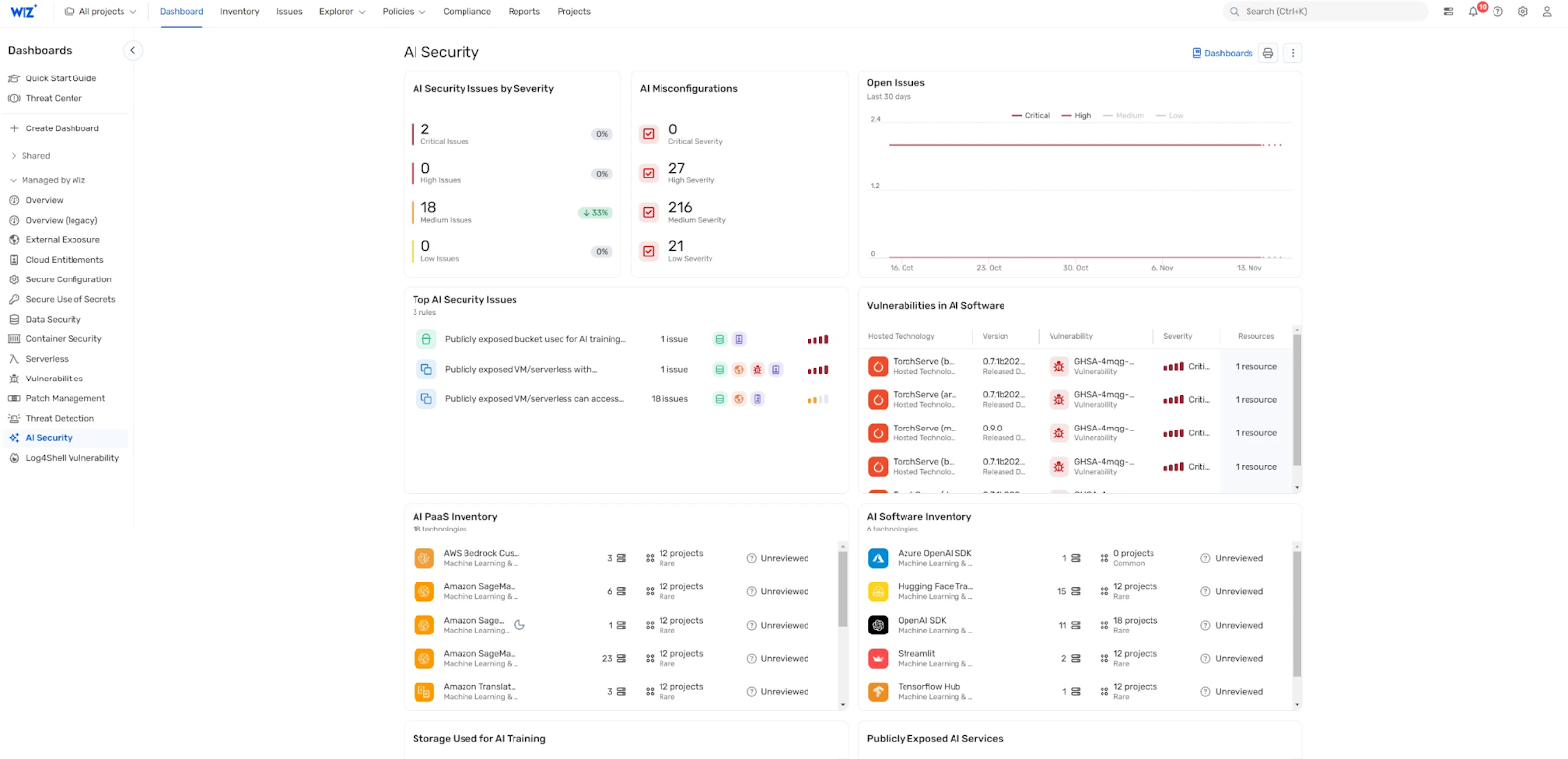
Most security scanners produce thousands of findings. Most of them don't matter. Wiz takes a different approach: it builds a unified security graph across your entire cloud environment, mapping relationships between workloads, identities, data stores, and network paths. Its AI then identifies toxic combinations of risks — a misconfigured S3 bucket that's accessible from an over-permissioned workload that has network access to your production database — that create a critical attack path even though each issue looks minor in isolation.
The output isn't a spreadsheet of CVEs. It's the 5 attack paths that could actually cause a breach, ranked by exploitability and blast radius.
Best for: Security and platform teams in multi-cloud environments that need prioritized, context-aware cloud security posture management.
Key capabilities:
- AI-powered attack path analysis across multi-cloud environments
- Agentless scanning with full cloud asset inventory (no agents to deploy or maintain)
- Risk prioritization based on actual exploitability, exposure, and blast radius
- Automated policy enforcement and compliance evidence generation
x. Cast AI — Autonomous Kubernetes Cost Optimization
Category: Cloud Cost / Kubernetes Operations
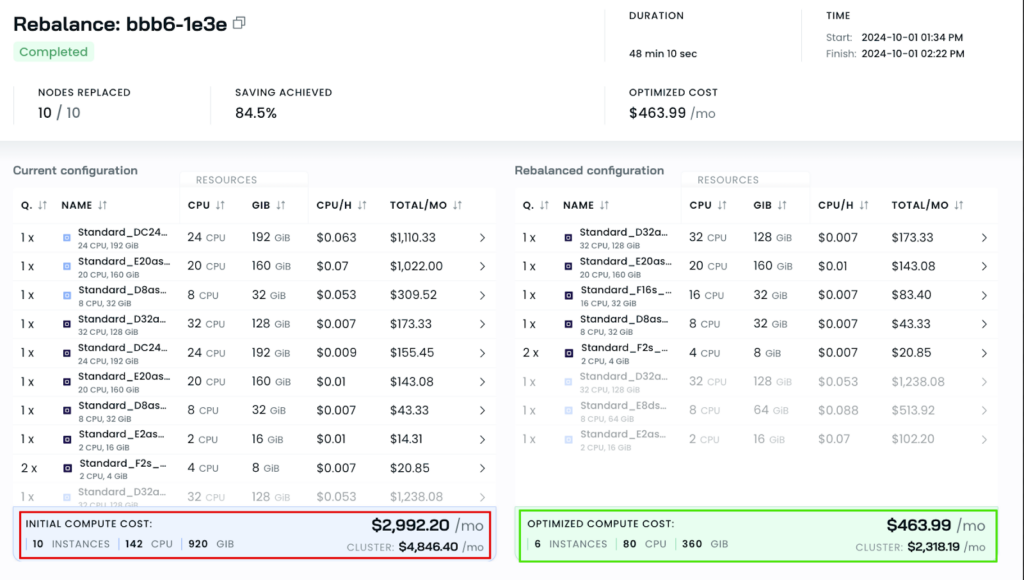
Cloud bills growing 30% year-over-year while traffic grows 10% is not a mystery — it's over-provisioning at scale, and it compounds every time a new service gets deployed with conservative resource requests nobody revisits. Cast AI's autonomous engine makes the thousands of right-sizing and scheduling micro-decisions that would take a dedicated FinOps team weeks to analyze: node type selection, spot instance management with interruption prediction, pod bin packing, and automatic scaling boundaries.
Teams typically see a 50–60% reduction in Kubernetes cloud spend. The FinOps team of three people writing Slack messages asking teams to right-size gets to do something more valuable.
Best for: Engineering teams running significant Kubernetes workloads who want autonomous cost optimization without manual FinOps toil.
Key capabilities:
- Autonomous node right-sizing and instance type selection
- Spot instance management with AI-driven interruption prediction
- Workload scheduling optimization, balancing cost and reliability
- Cost allocation and showback reporting by team/namespace
xi. K8sGPT — AI-Powered Kubernetes Troubleshooting
 Category: Kubernetes Operations / Developer Tooling
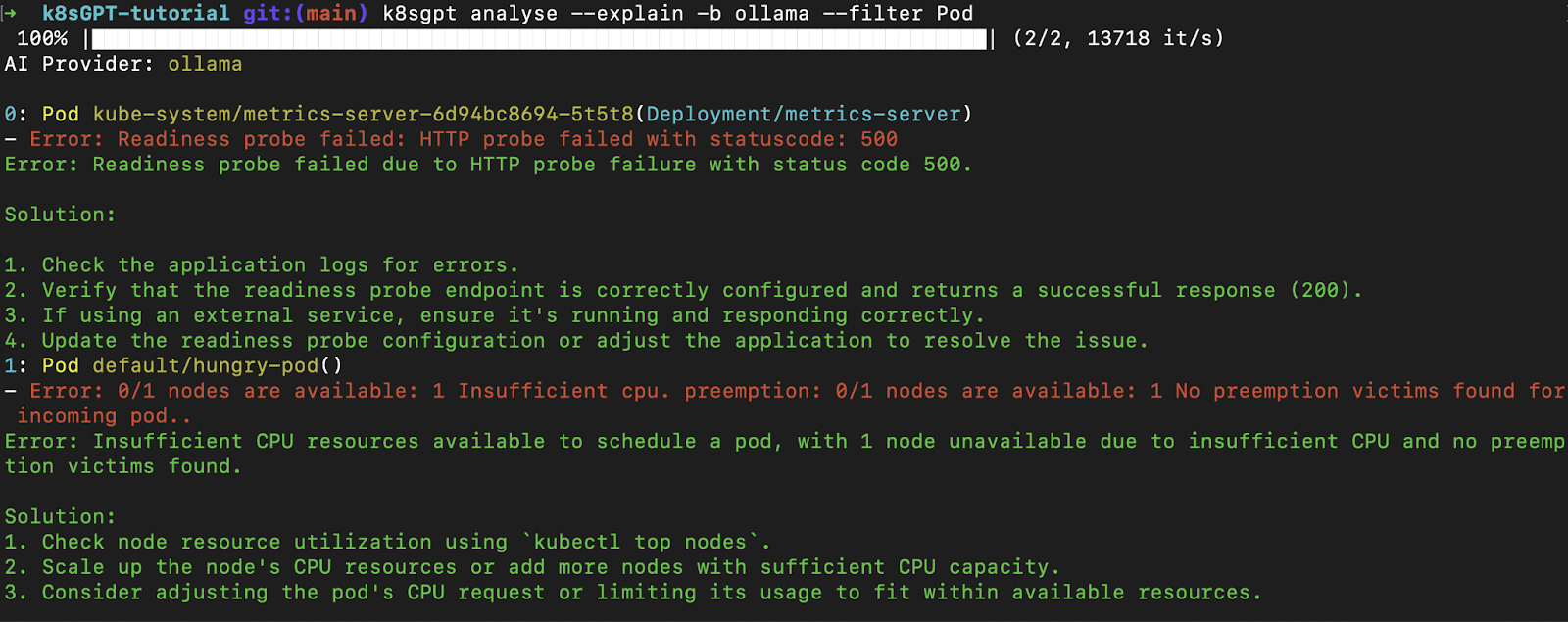
Kubernetes error messages are famously unhelpful. CrashLoopBackOff, OOMKilled, Evicted — they tell you what happened, not why. K8sGPT is an open-source CLI tool that scans your cluster, reads resource statuses, events, and logs, and produces a plain English diagnosis with remediation steps. It integrates with multiple LLM backends, including local/private models for teams with data residency requirements.
For platform teams tired of being the Kubernetes translation layer for every application team, K8sGPT running in operator mode gives every engineer a first line of defense before they file a ticket.
Best for: Platform and DevOps engineers wanting AI-assisted K8s troubleshooting without a full commercial platform commitment.
Key capabilities:
- Natural language explanations of Kubernetes errors and misconfigurations
- Support for multiple LLM backends (OpenAI, Gemini, local models)
- Operator mode for continuous cluster health scanning
- Slack and notification integrations for proactive alerting
xii. LinearB — AI Engineering Metrics and Workflow Automation
Category: Developer Experience / Engineering Analytics
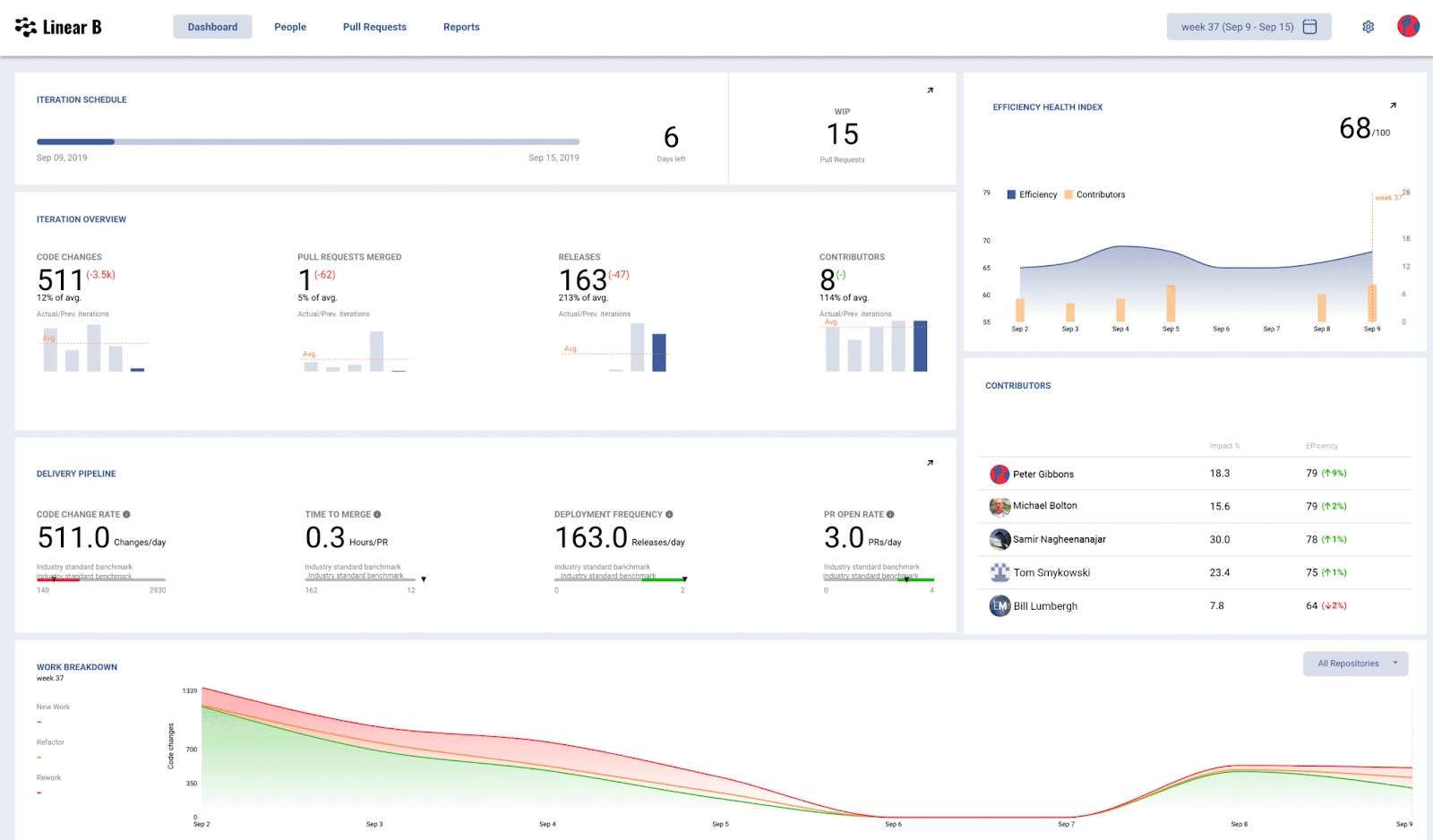
"Our platform team is a bottleneck" is a feeling. LinearB makes it a measurement. It analyzes Git, CI/CD, and project management data to surface DORA metrics, cycle time breakdowns, deployment frequency, and change failure rate — and then generates AI recommendations for what to fix first. The WorkerB automation layer closes the loop: auto-merging PRs that meet defined criteria, updating ticket statuses from Git activity, flagging PRs that have been in review for 4 days with no movement.
All insights are team-level, not individual-level. The goal is systemic improvement, not surveillance.
Best for: Engineering leaders who need data-driven visibility into where the delivery system is breaking and automated workflows to fix the most common friction points.
Key capabilities:
- DORA metrics with trend analysis and cross-team benchmarking
- AI-generated recommendations for cycle time and deployment frequency improvement
- WorkerB: automated PR workflows based on team-defined rules
- Git-to-issue correlation for sprint tracking without manual status updates
Conclusion
The 12 tools covered here address the most critical layers of the post-code lifecycle: infrastructure that provisions itself, pipelines that know when not to deploy, observability that acts instead of alerting, and on-call that handles known failures automatically.
The right stack isn't all 12 — it's the tools that close your loudest bottlenecks first. Start there.
We built StackGen to be the platform that covers the most critical layers: intent-to-infrastructure automation, AI-powered DevOps and SRE Agent, and unified cloud-native observability. If your team is ready to move past alert dashboards and ticket queues, we'd like to show you what that looks like in practice.
Book a demo or start a free trial — and see what happens when the bottleneck finally moves all the way out of your stack.